


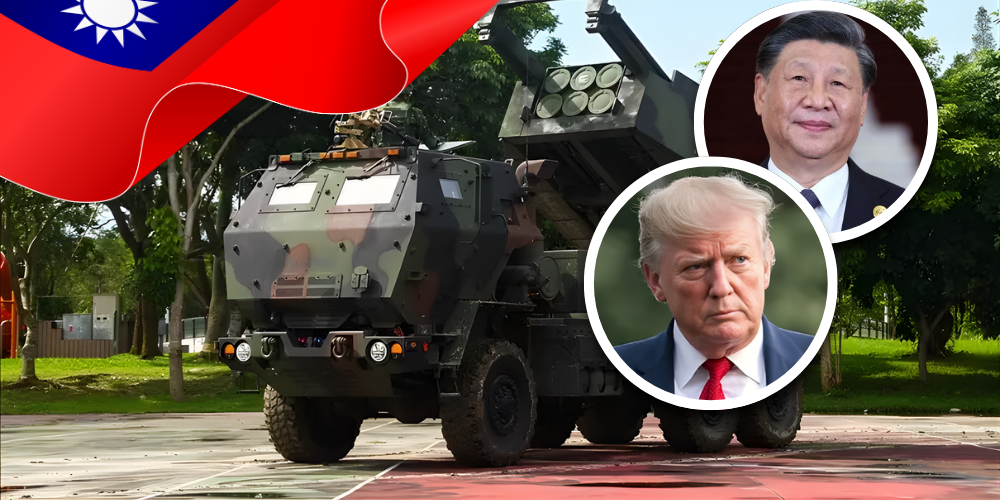
A high-stakes phone call just placed Taiwan at the center of a delicate power balance. Hours after Washington approved a massive weapons package for Taipei, Beijing and Washington picked up the line.
Taiwan’s government, watching closely, responded with measured confidence rather than alarm. Officials in Taipei now say the Trump–Xi conversation could help steady a region that has grown increasingly tense.
The call followed a major US arms sale to Taiwan. In December, Washington moved forward with an $11 billion package that included advanced rocket launchers, self-propelled howitzers, and several types of missiles. China condemned the deal at the time and conducted two days of military drills around the island, deploying air, naval, and missile units near the Taiwan Strait.
During Wednesday’s conversation, Chinese leader Xi Jinping told President Donald J. Trump that Taiwan is “the most important issue” in US–China relations. State media said Xi urged Washington to be “prudent” with future arms transfers, arguing that Beijing must safeguard its sovereignty and territorial integrity. Trump later described the call as “excellent” and “long and thorough,” saying relations between the two powers were “extremely good.”
Taiwan reacted calmly. Deputy Foreign Minister Chen Ming-chi told AFP that Taipei did not “worry too much” about the conversation. Instead, he said the dialogue could help stabilize the Taiwan Strait, where Chinese military activity has steadily increased.
Taiwan’s President Lai Ching-te separately insisted that ties with Washington remained “rock solid” and that all cooperation projects would continue uninterrupted.
At the same time, Taiwan’s domestic politics complicate the picture. Taipei’s opposition-controlled parliament has blocked parts of President Lai’s defense budget, including a proposed $40 billion special defense fund, even as Washington moves ahead with new weapons deliveries.