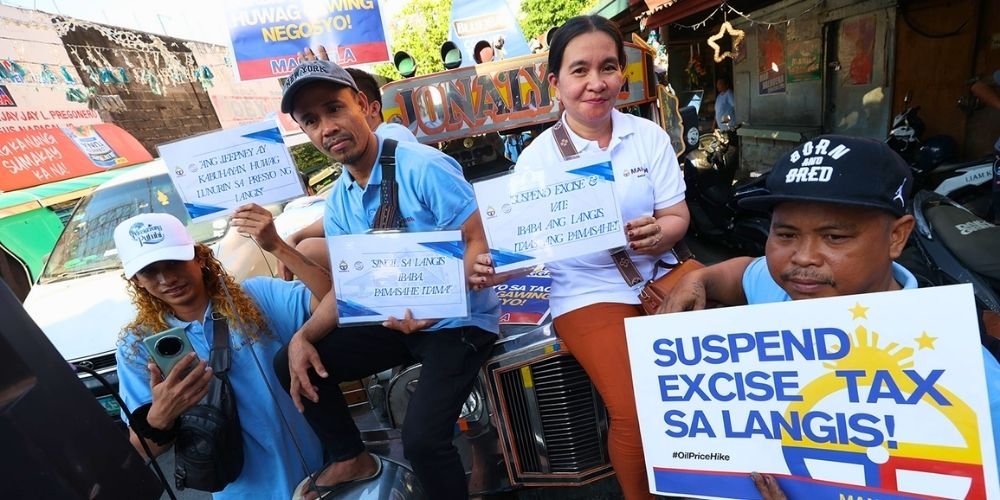
Lower fuel prices may come with a steep tradeoff that goes beyond the pump. The Department of Finance warned that expanding the suspension to diesel and gasoline could lead to ₱43.6 billion in losses within three months.
The current measure covers only liquefied petroleum gas (LPG) and kerosene, with an estimated ₱4.1 billion impact. Officials continue monthly reviews as lawmakers push for wider relief and faster implementation.
“Now, if you decide to include a suspension of diesel and gasoline [on top of] LPG and kerosene, it will be around PHP43.6 billion losses in three months,” Karlo Adriano, Finance Undersecretary, said on the projected fiscal impact of expanding the suspension.
Adriano said higher fuel prices may increase value-added tax (VAT) collections by about ₱13 to ₱14 billion over three months. The expected gains still fall short of covering the projected losses from a broader suspension. The gap could leave a negative revenue impact of around ₱30 billion.
Meanwhile, the government limited the suspension to LPG and kerosene to focus on lower-income households. Data from the Philippine Statistics Authority shows that 50 percent of kerosene consumption comes from the poorest 38 percent of households. Around 56 percent of LPG use comes from the bottom 70 percent.
The suspension could reduce LPG prices by about ₱36.95 per 11-kilogram cylinder. Kerosene prices may drop by around ₱5.60 per liter. Alongside this, the government is rolling out a ₱10-per-liter fuel subsidy program instead of expanding the tax suspension.
At the same time, lawmakers are pressing for broader and faster relief. Some proposals include applying the suspension to existing fuel inventories so price cuts take effect immediately.
Finance officials raised concerns over tracking nationwide fuel stocks and managing refunds across roughly 14,000 gas stations.