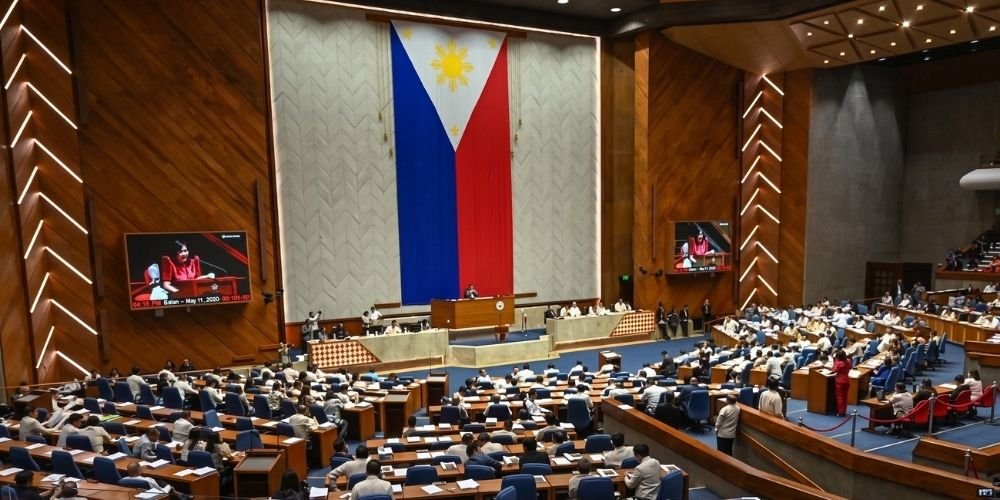
House lawmakers are advancing a proposal to prohibit relatives of public officials from entering into government contracts, targeting family-linked deals in public procurement while officials remain in office.
The House Committee on Revision of Laws discussed House Bills 5940, 8144 and 8650 on Tuesday, with Rizal 2nd District Rep. Emigdio Tanjuatco III presiding as chairman. The proposed measures would prohibit relatives within the fourth civil degree of consanguinity or affinity from directly or indirectly participating in government contracts.
In simpler terms, the ban would extend to spouses, children, siblings, first cousins, aunts, uncles, nieces and nephews. It would cover supply contracts, infrastructure projects, joint ventures, public-private partnerships and subcontracting arrangements.
Tanjuatco said Republic Act 3019, Republic Act 6713 and Republic Act 12009 already address conflicts of interest by banning financial interest and requiring disclosure, but noted that these laws “remain largely reactive.”
“What these bills propose is a proactive, absolute, and categorical bar,” Tanjuatco said.
The proposed measures would also apply to companies connected to relatives of public officials. Tanjuatco said the three House bills would disqualify corporations, partnerships or associations in which covered relatives are beneficial owners, officers, directors, trustees or hold controlling interests.
The term “public official” would include agency heads, governing board members, Bids and Awards Committee members and personnel occupying policy-determining, supervisory or managerial positions.
Bidders and contractors could also be required to submit sworn certifications declaring that they are not related to any public official within the prohibited degree.
Proposed penalties include dismissal from service, perpetual disqualification from public office, imprisonment, fines ranging from P500,000 to P2 million, forfeiture of contract benefits and the dissolution of corporate offenders.
Tanjuatco said the bills still require further deliberation but stressed the urgency of crafting a substitute bill because the measure is considered a priority of the Marcos administration and part of the Legislative-Executive Development Advisory Council agenda.