


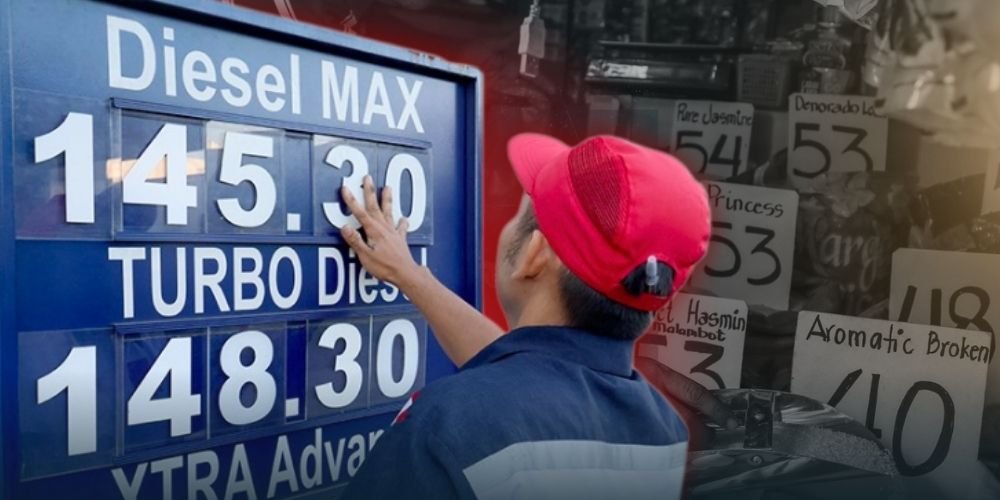
Prices are increasing at a faster pace as global tensions push fuel costs higher. Inflation rose to 4.1% in March, marking its fastest pace in 20 months.
The Philippine Statistics Authority linked the increase to oil price shocks tied to the Middle East crisis. Transport and food costs followed as fuel prices filtered through the economy.
The surge in fuel costs drove the sharpest changes across key sectors. Diesel inflation jumped to 59.5% from a negative rate in February, while gasoline rose to 27.3%. As a result, transport costs increased by 9.9%, reversing a previous decline. This reflects how fuel prices directly affect fares, logistics, and daily expenses.
At the same time, food prices also began to move higher. Food inflation reached 2.8% as rice prices rose to 3.6% after months of decline.
Vegetables and fruits also posted higher inflation, driven partly by increased transport and logistics costs. These shifts show how fuel prices extend beyond energy and into basic goods.
Inflation rose across all regions, with Central Visayas posting the highest rate at 7.4%. Metro Manila increased to 3.6%, while areas outside the capital reached 4.2%. Lower-income households experienced faster inflation at 4.2%, reflecting higher exposure to food and fuel costs. This highlights uneven impact across income groups.
“But definitely we’re seeing higher numbers this April because we had a series of price increases during the first week,” National Statistician Dennis Mapa, on early signs that fuel-driven inflation pressures may continue.
In response, the government rolled out targeted measures to stabilize supply and ease costs. Authorities secured 165.6 million liters of diesel for April delivery to support the domestic supply.
Programs such as fuel subsidies, toll rebates, and logistics support aim to manage transport and food costs. The central bank also kept interest rates at 4.25% while monitoring inflation risks.