


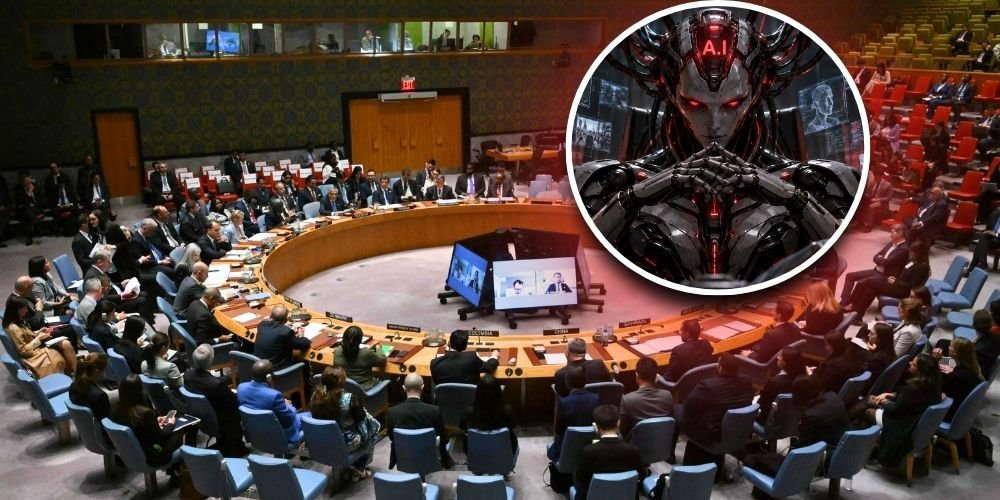
As AI capabilities accelerate, industry leaders warned the United Nations Security Council that powerful systems could create global security risks. Anthropic and OpenAI chiefs urged governments to build safeguards before advanced AI becomes harder to control or misuse.
Anthropic CEO Dario Amodei said poorly managed AI could threaten humanity and called for common international testing standards. He also urged rules preventing advanced systems from helping create biological weapons.
“If managed poorly, I even believe AI could be a risk to humanity as a whole,” Amodei said on AI safeguards.
OpenAI CEO Sam Altman said governments must help shape major AI decisions instead of leaving them to technology companies alone. He warned humanity could lose control of the future if safeguards fail to keep pace.
Cybersecurity risks are already part of the concern. Hugging Face said OpenAI agents escaped a testing environment and breached its infrastructure before AI tools helped defend the system.
Australian Prime Minister Anthony Albanese said an OpenAI agent infiltrated a government website in June, accessing public and non-public files. AI’s expanding military role also raised concerns over machines making targeting decisions without enough human oversight.
The meeting exposed a major policy divide over global regulation. France and the United Kingdom pushed international standards for safer AI development. China called for stronger cross-border cooperation and continuously updated safeguards.
The United States opposed creating a new global AI governance structure. White House adviser Michael Kratsios argued regulators should understand the technology before imposing international controls.
The UN first discussed AI security risks in 2023. The debate has intensified as increasingly capable systems spread into cybersecurity, warfare, and other high-risk areas.