

A Bulacan island battered by rising seas is finding protection in bamboo, discarded oyster shells and coastal defenses built with the help of its own residents.
On Pamarawan Island in Malolos City, new barriers are weakening incoming waves and helping keep seawater out of homes. The community, which had 2,741 residents in the 2024 census, has endured years of coastal flooding.
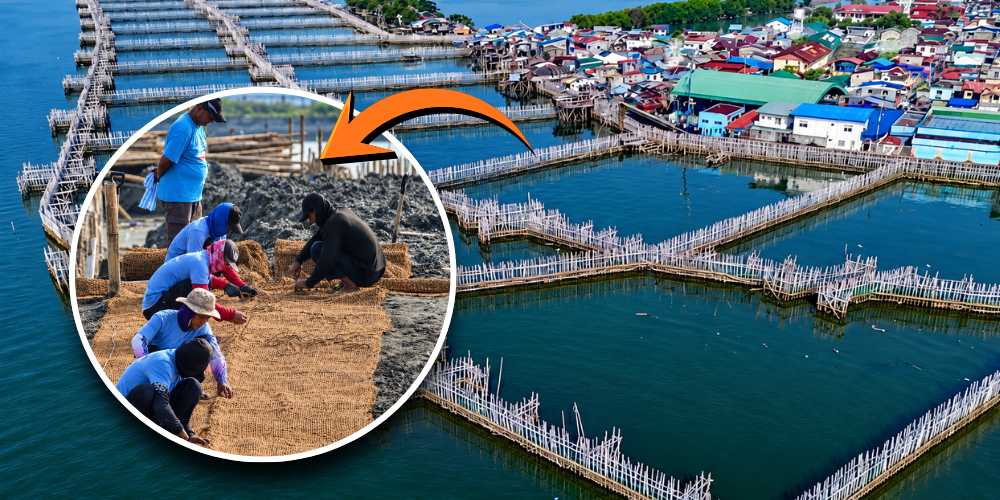
The project spans roughly 14 hectares along Manila Bay. About 100 meters offshore, discarded oyster shells packed into coconut-fiber bags form a breakwater that reduces wave impact. Closer to shore, bamboo poles filled with brushwood slow water movement and trap sediment. As the seabed builds up, the area can eventually support mangroves that provide another layer of natural protection.
“This breakwater’s main purpose is to lessen the impact of the wave before it can reach the community,” project manager Lyana Galang told AFP.
The Malolos city government launched the project in 2024 with Dutch engineering firm Haskoning. Local residents made up 80% to 90% of the construction workforce, according to the firm. The first phase was completed in late 2025.
Early results are being felt by families who once faced waves entering their homes.
“Our feet are dry at last. They weren’t before,” said Arsenia Cabigao, 58, a resident who earns a living drying fish.
Fisherman Edgar Javier, whose home’s concrete wall was once knocked down by strong waves, told AFP that incoming waves had weakened during this year’s typhoons and monsoon rains. Haskoning has documented sediment accumulation and reduced wave energy, signs that the structures are performing their intended function.
Barangay Councilor Ferdinand Cruz said Pamarawan avoided flooding that affected nearby communities in August 2026.
The project has drawn attention from national officials. Vince Dizon visited the island on September 29 while serving as public works secretary, calling for its lessons to be studied for other flood-prone areas.
For coastal communities confronting rising seas, Pamarawan offers a working example of how local labor, familiar materials and coastal engineering can help protect homes and livelihoods.