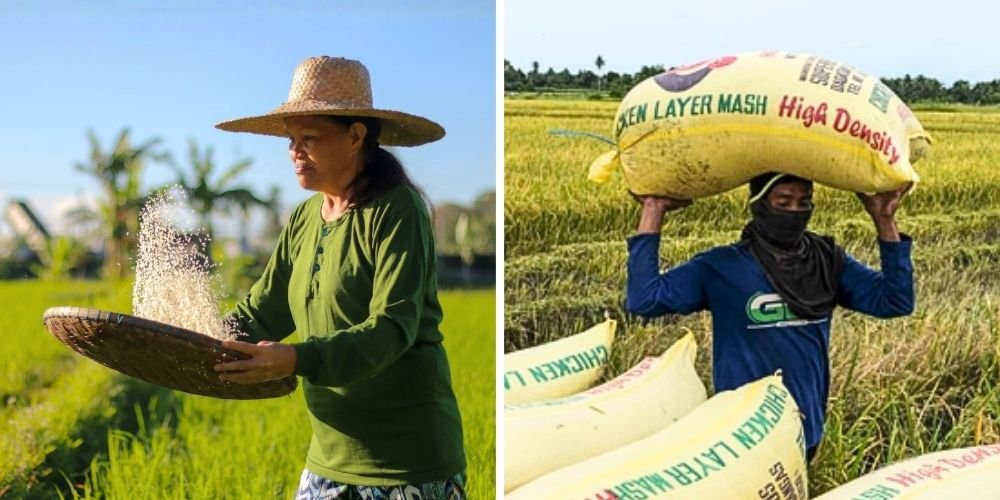
As global tensions push prices higher, the country’s rice supply is holding steady for the time being. The Department of Agriculture – Philippines (DA) said supply remains sufficient while preparing additional support for farmers and fisherfolk.
National Food Authority (NFA) warehouses are nearly full, while global supply remains stable as exporters like India and Vietnam enter peak harvest. At the same time, the DA is proposing up to ₱30 billion for farmers and ₱10 billion for fisherfolk to sustain production.
“If ever there will be a problem, it’s not going to be this year,” Agriculture Secretary Francisco Tiu Laurel Jr. said on current rice supply levels supported by available stocks and global supply conditions.
The department said rising fuel and fertilizer costs are increasing pressure on farm production. Fertilizer prices have doubled to around $800 per ton from $400 due to the ongoing crisis. The government is now in talks with India, Russia, and Belarus to secure supply and stabilize input costs.
Meanwhile, projections show that production could decline without further intervention. Estimates point to a potential 20 percent drop, equivalent to about two million metric tons. Higher fuel prices are also increasing transport costs, affecting both farm operations and distribution.
To address these pressures, the government has started rolling out financial assistance. Around 14,400 farmers received ₱5,000 each in fuel subsidies, while 15,669 fisherfolk received ₱3,000. The ₱10 billion Presidential Assistance to Farmers and Fisherfolk program is also underway, targeting over four million beneficiaries.
In addition, the DA has expanded support measures to improve supply flow and reduce losses. These include fuel subsidies, logistics support, and KADIWA market linkages to connect farmers directly to consumers. Longer-term measures such as cold storage and processing facilities are also being developed to preserve output and reduce waste.