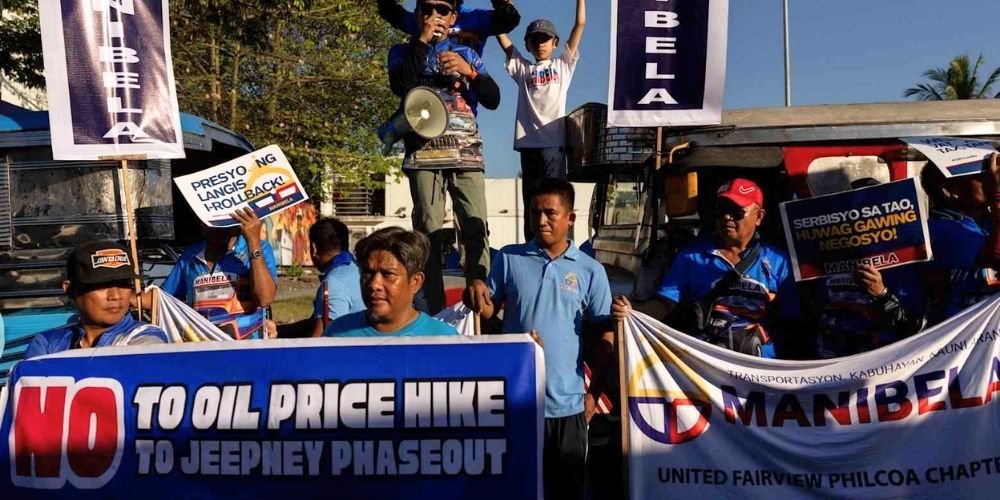
Fuel prices are already straining daily expenses, and the pressure is now moving into something more serious. A new study warns the ongoing energy crisis could push up to 1.3 million Filipinos into poverty.
The Philippine Institute for Development Studies (PIDS) estimates the poverty rate could rise to 14.4 percent. Under a more severe scenario, it could reach 16.3 percent.
Before the crisis, projections showed poverty declining to 13.2 percent by 2025. However, global tensions and peso depreciation pushed diesel prices to ₱103 to ₱117 per liter.
These increases affect households near the poverty line the most. Many rely on a single income and have limited buffers against sudden price shifts.
“Being classified as lower middle income does not mean a household is secure,” Jose Ramon G. Albert, PIDS senior research fellow, on how income labels fail to reflect financial vulnerability.
The study shows the impact varies sharply across income groups. Lower-income households lose up to 16.2 percent of purchasing power. Higher-income households see losses closer to 3.4 percent. Food expenses take a larger share of spending for poorer families.
Rural areas face higher exposure due to dependence on fuel in agriculture. Poverty incidence in these areas could reach 22.5 percent under severe disruption.
Agriculture faces added pressure from fuel costs and climate risks. These factors affect both production and income stability.
PIDS advises against broad fuel subsidies, noting they deliver larger absolute benefits to wealthier households. Instead, it recommends targeted cash transfers worth ₱6,000 per household.
The funds are designed to offset purchasing losses and support immediate spending. Estimates show this could generate up to ₱2.8 in economic output per peso spent.
The study points to targeted responses using existing systems. It also highlights the need to expand social protection and improve identification of vulnerable households.