

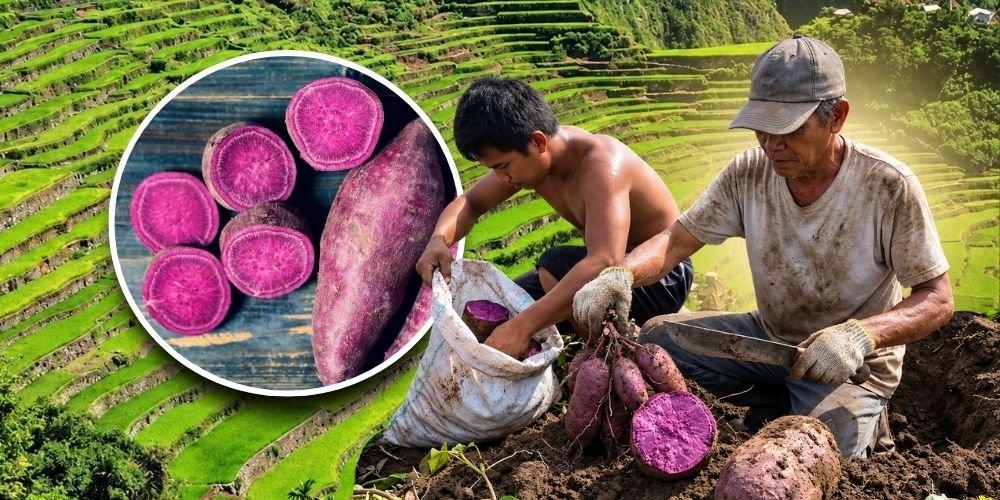
The Department of Agriculture is expanding ube cultivation in Cagayan Valley, targeting 500 hectares by 2028 to meet growing international demand and increase farmers’ incomes.
DA Regional Field Office II is working with the Echague municipal government in Isabela, farmer groups and potential business partners to expand production and secure buyers. The initial target is 100 hectares, with another 70 hectares planned. The agency aims to secure 1.4 million additional planting setts by December.
As of Oct. 7, the regional office had allocated ₱3.7 million to produce 420,000 ube setts, or tuber pieces used for planting, across six research centers and stations. Of these, 211,180 had been delivered to Echague, with 208,820 still pending.
PSA data showed that ube’s average farmgate price fell from ₱45.24 per kilogram in 2024 to ₱40.70 in 2025, despite rising retail prices.
Trade data platform Tridge recorded fresh ube export transactions priced at 3.00 USD per kilogram in January 2026 and 2.46 USD in February, equivalent to approximately ₱188 and ₱154 at the stated Oct. 12 exchange rate. These figures reflect specific export transactions, not actual farmer earnings.
“By combining the DA’s technical expertise and production support with the LGUs’ capacity to mobilize farmers, identify suitable areas, and provide local support, we can accelerate expansion, respond to growing global demand, and develop a bigger export market that will translate into higher and more sustainable incomes for our farmers,” Agriculture Secretary Francisco Tiu Laurel Jr. said.
At Quirino State University, DA-funded facilities have produced ube powder samples that met Japan’s quality requirements, with marketing assistance from the DTI.
Exports of fresh ube and planting materials have been suspended indefinitely since mid-August to protect domestic supply. The restriction does not cover processed products such as ube powder, puree and jam.
On Oct. 1, Korean investors from Carnot Fleet assessed Simon’s Farm in Isabela. Separate discussions with the Agricultural Credit Policy Council covered possible support for cold storage, mechanization and processing facilities.