


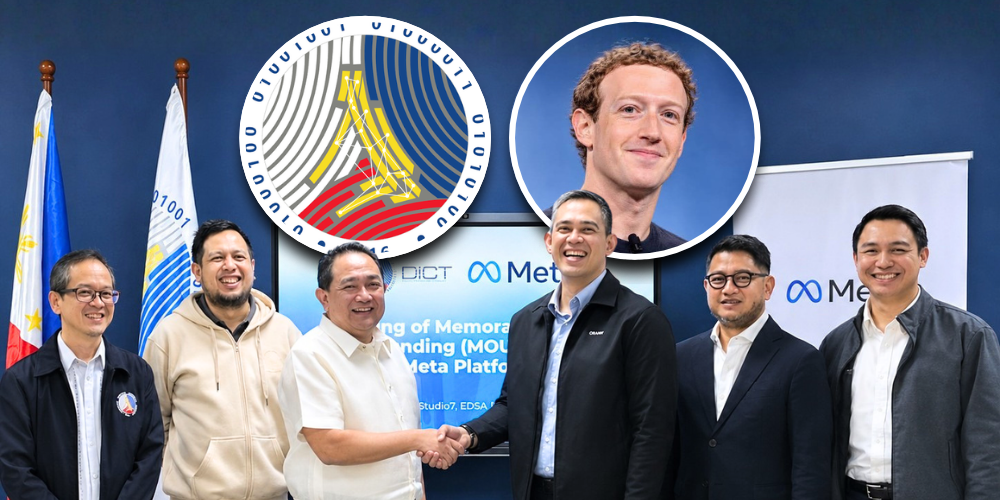
The Philippine government has partnered with Meta to combat AI-generated deepfakes, online scams and child sexual exploitation, as manipulated images and voices become easier to create and spread online.
The Department of Information and Communications Technology (DICT) and Meta, the American technology company behind Facebook and Instagram, signed a memorandum of understanding Tuesday, Nov. 24, in Quezon City to strengthen efforts against digital exploitation.
DICT Secretary Robert Joseph de Claro and Meta Philippines Head of Public Policy Gio Tingson led the signing, witnessed by Cybercrime Investigation and Coordinating Center Executive Director Renato Paraiso.
The partnership comes as artificial intelligence makes it increasingly easy to manipulate ordinary photographs into sexually explicit images without the subjects’ knowledge or consent. AI tools can also be used to fabricate voices and identities, creating new avenues for fraud and abuse.
Meta said it uses artificial intelligence and digital fingerprinting technology to identify prohibited content and help prevent its spread. The systems are intended to detect potentially harmful material without relying solely on victims to report it.
But the agreement also raises questions about how the partnership will translate into stronger platform accountability and enforcement.
Under Republic Act No. 11930, internet intermediaries are required to remove or block child sexual abuse and exploitation materials under specified conditions. The MOU, however, does not publicly detail its enforcement mechanisms, detection standards or any additional penalties for noncompliance.
The partnership also includes efforts to expand digital literacy programs for Filipino children, parents and teachers.
For a country where Facebook and Instagram are widely used, the agreement’s impact will depend on whether it leads to faster removal of abusive content, stronger protections for victims and more effective action against those who exploit digital platforms.