


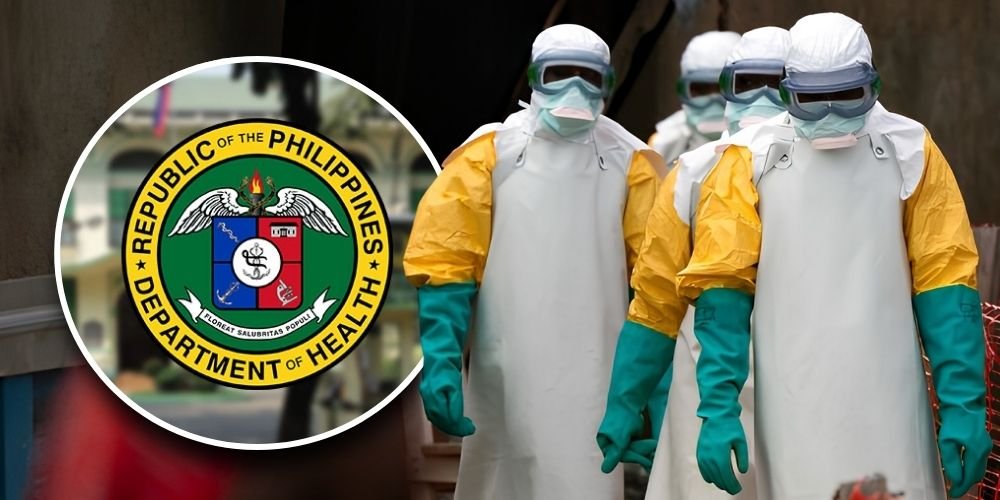
The Department of Health is coordinating with the World Health Organization following an Ebola outbreak in the Democratic Republic of Congo and Uganda that was declared a public health emergency of international concern, placing health authorities on alert over travel risks and possible exposure of nationals in affected areas.
In a Sunday statement issued by Health Undersecretary and spokesperson Dr. Albert Domingo, the DOH said the WHO’s guidance is clear for countries like the Philippines, “where there is no Bundibugyo and that does not share a land border with countries that have Bundibugyo.”
The outbreak involves Ebola disease caused by the Bundibugyo virus. The WHO said the emergency does not meet the criteria for a pandemic emergency, but warned that countries sharing land borders with the DRC face a high risk of further spread because of cross-border movement, travel links and continuing uncertainty surrounding the outbreak.
As of May 16, the WHO reported eight laboratory-confirmed cases, 246 suspected cases and 80 suspected deaths in Ituri Province in the DRC, covering at least three health zones, including Bunia, Rwampara and Mongbwalu. It also reported two laboratory-confirmed cases in Kampala, Uganda, including one death, involving individuals who had traveled from the DRC.
For countries such as the Philippines, the WHO advised providing travelers to affected and at-risk areas with “relevant information on risks, measures to minimize those risks, and advice for managing a potential exposure.”
The WHO also said countries should be prepared to facilitate the evacuation and repatriation of nationals exposed to the virus. It added that entry screening at airports or other ports outside the affected region is not considered necessary for returning passengers from at-risk areas.
“Among others, the general public should be provided with accurate and reliable information on the Bundibugyo outbreak and ongoing measures to reduce risk,” the DOH said.
“The DOH is always ready and on alert. We have been notified through the IHR (International Health Regulations) channels, and are in active coordination with the WHO,” it added.