

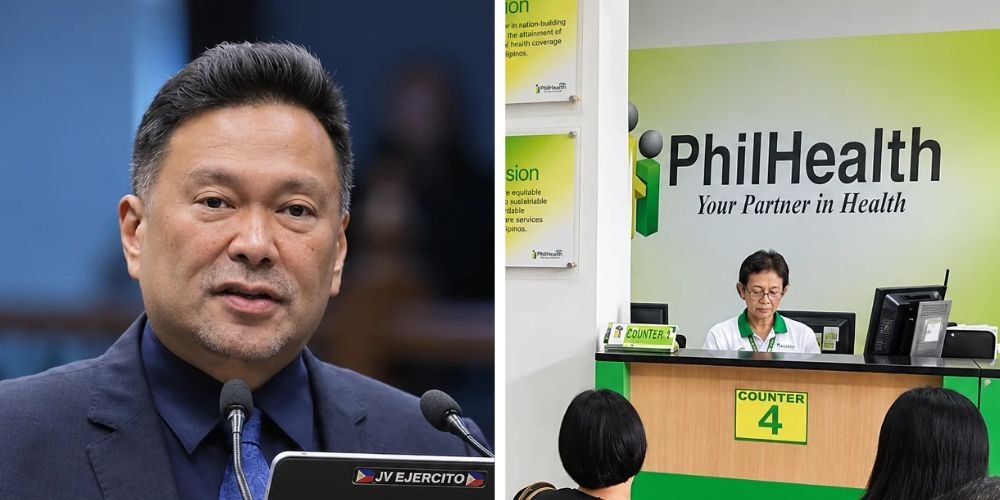
Senate Finance Committee Chairman JV Ejercito has spearheaded the realignment of ₱19.8 billion from government financial assistance programs toward institutional healthcare under the Senate’s version of the proposed ₱7.20-trillion 2027 national budget.
Ejercito said the Senate reduced allocations for the Department of Social Welfare and Development’s (DSWD) Assistance to Individuals in Crisis Situation (AICS) and the Department of Health’s (DOH) Medical Assistance Program (MAP) by ₱9.9 billion each.
The Senate also increased the proposed government subsidy for the Philippine Health Insurance Corporation (PhilHealth) from ₱73 billion to ₱94.2 billion, approaching Ejercito’s ₱100-billion target to cover the premiums of indirect contributors and vulnerable sectors.
As the principal author and sponsor of the Universal Health Care (UHC) Act, Ejercito emphasized the importance of establishing a healthcare system that reduces Filipinos’ dependence on discretionary government assistance.
“It’s not enough that we have a Universal Health Care Law. Every Filipino should feel this. If anyone in the family is sick, where to get the money to pay for the hospital should not be the first problem. What they should first think about is how someone they love would get well,” Ejercito said.
To institutionalize zero-balance billing, the Senate allocated ₱7.6 billion to DOH hospitals, ₱2 billion to legacy and specialty hospitals, and ₱1 billion to local government-run hospitals.
Under the Senate’s proposed ₱378.6-billion health sector budget, additional funding would also support hospital modernization, immunization programs, and preventive healthcare services.
Ejercito likewise vowed to eliminate duplicate and questionable appropriations through a comprehensive review of the spending bill, emphasizing transparency, accountability, and compliance with budgetary requirements.
The proposed realignments remain subject to bicameral conference committee deliberations, tentatively scheduled for Dec. 9 or 10.