


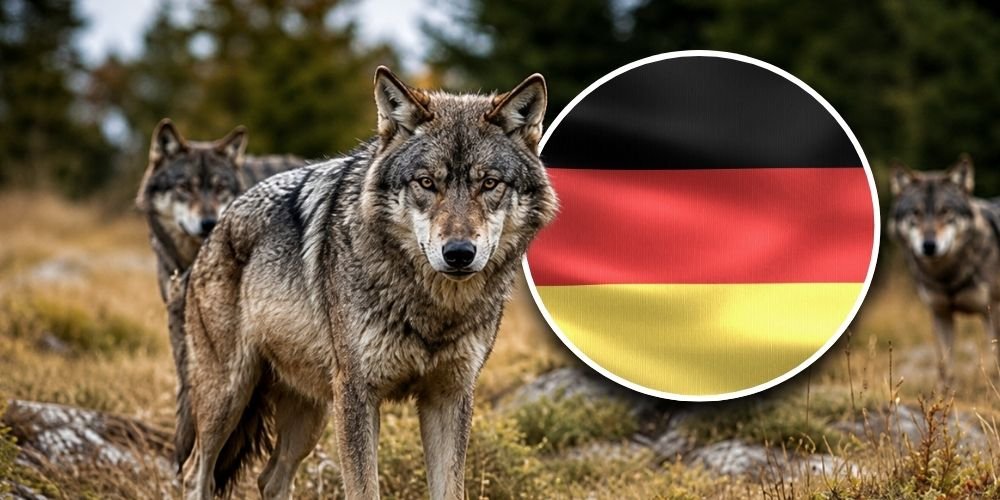
After being wiped out in Germany for more than a century, wild wolves have returned to the country’s forests and rebuilt their population naturally, becoming a major wildlife recovery story in Germany.
Wolves were considered extinct in Germany since the middle of the 19th century after years of persecution. Their return began around 2000 when a wild wolf pair was confirmed in Saxony near the Polish border and later produced pups. The animals were not reintroduced by humans. Wildlife experts found that wolves migrated naturally from neighboring areas and established new territories.
Monitoring by Germany’s Federal Agency for Nature Conservation and the Documentation and Advice Center on Wolves recorded 105 wolf packs, 25 wolf pairs, and 13 individual wolves during the 2018 to 2019 monitoring period. The number of adult wolves in confirmed territories was estimated between 275 and 301.
“The number of wolves in Germany is increasing,”
said BfN president Beate Jessel, noting that individual territorial wolves were detected for the first time in four German states.
Germany continues to track its wolf population through scientific monitoring that records territories, offspring, fatalities, and movements. Wildlife groups highlight that wolves contribute to ecosystems by helping regulate populations of animals such as deer and wild boar.
The return of wolves has also brought challenges, particularly among farmers concerned about livestock attacks. Authorities and conservation groups have pointed to measures such as protective fencing and livestock guardian dogs as ways to manage conflicts.
After disappearing from Germany’s landscape for generations, wolves have once again established themselves in the country’s forests, highlighting the role of conservation measures and scientific monitoring in supporting wildlife recovery.