


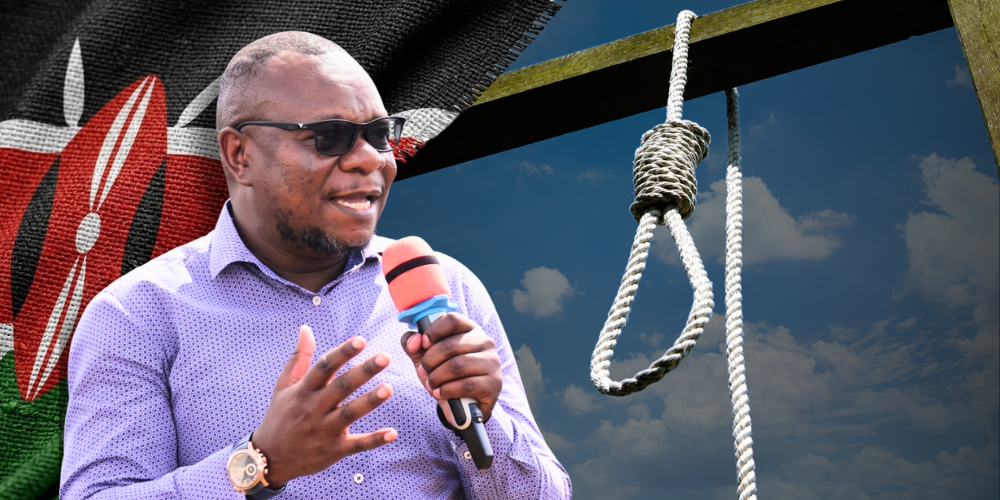
A Kenyan politician has called for the public execution of corrupt officials, arguing that harsh punishment is necessary to deter the theft of public funds and restore public trust.
Orange Democratic Movement Communications Director Philip Etale made the remarks during a morning interview on July 13 as Kenya faced renewed pressure to strengthen its anti-corruption efforts.
“If we get three corrupt people hanged in public at Uhuru Park, we will all fear corruption, just like in China,” Etale said.
He argued that corruption had become deeply entrenched in Kenyan society and said existing penalties had failed to discourage offenders.
“We need to have harsh laws that can help us curb corruption because it has become something that I think is our cup of tea, daily cup of tea,” he said.
Etale cited a recent trip to China to explain his position. He recalled offering a tip to a hotel employee after receiving laundry services but said she refused because of the severe consequences associated with accepting improper payments.
“I wanted to give her some tips. You know, with that bad English, ‘No, no, no tip.’ Because they know the consequences,” he said.
“If I give her that tip and then I report, she’ll be hanged,” Etale added.
China retains the death penalty for certain corruption offenses, although its use in financial crime cases has drawn international criticism.
Etale’s comments came as the World Bank called on Kenya to tighten conflict-of-interest rules, improve electronic procurement, strengthen treasury controls and expand whistleblower protections. The institution warned that corruption diverts resources away from hospitals, schools, roads and other essential public services.
The debate also has relevance in the Philippines, where corruption and plunder are criminal offenses but capital punishment remains prohibited under Republic Act No. 9346. Reinstating the death penalty for graft would require a change in Philippine law.