


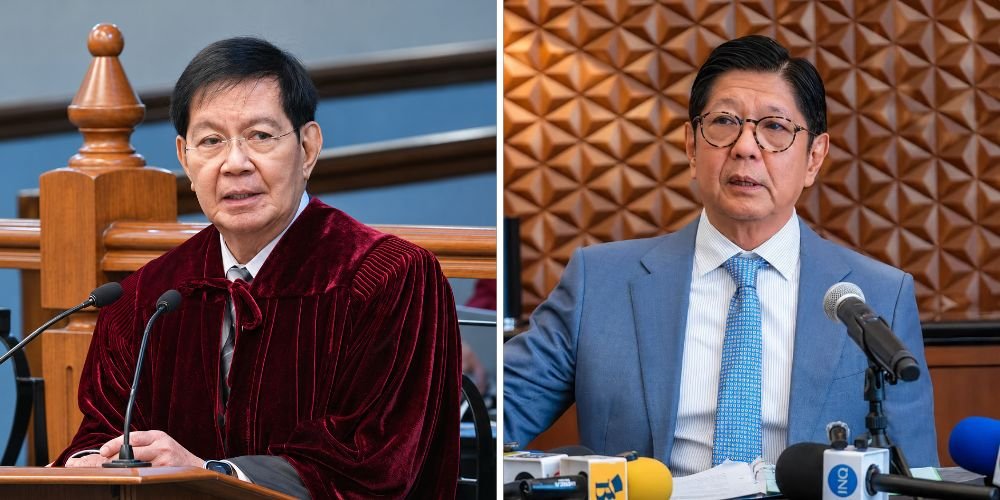
Sen. Ping Lacson criticized President Bongbong Marcos for attributing the Philippines’ sluggish economic growth to the US-Iran conflict, arguing that the explanation falls short when neighboring countries facing similar disruptions to oil trade continue to post stronger economic growth.
During a Nov. 20 briefing in Shenzhen, China, Marcos defended his economic managers and underscored the impact of the conflict in Iran.
“All the difficulties we’re going through can be clearly and directly traced to the war in Iran,” he said.
Lacson, however, pointed out that other Southeast Asian economies also experienced pressure from higher oil prices due to the US-Iran conflict but still registered stronger economic performances.
“With all due respect, Mr. President, blaming the US-Iran conflict will not suffice,” Lacson said on Nov. 21. “
The Philippine Statistics Authority reported that the economy grew 2.1% in the third quarter of 2026, down from 2.4% in the previous quarter. This marked the country’s slowest growth since the first quarter of 2021.
Lacson cited Vietnam’s 9.95% growth, Indonesia’s 5.47%, Singapore’s 5.4%, and Malaysia’s 5.3% during the same period. These countries, like the Philippines, also dealt with increased fuel costs.
Other factors also affected Philippine economic activity. Agriculture contracted by 4.8%, public construction declined for a sixth consecutive quarter, and delays in infrastructure projects and payments slowed government spending.
The slowdown has added to concerns about inflation, the weakening peso, stock market performance, and investor confidence. These indicators formed part of Lacson’s earlier appeal for a closer examination of economic management.
The senator clarified that he was not proposing a Cabinet shake-up but wanted a review of existing policies and an evaluation of the economic team’s approach.
“I did not posit a Cabinet reshuffle, but a long hard look at our economic team to revisit some of our economic policies,” Lacson said.