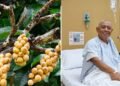


Leaves of lanzones, a fruit grown in the Philippines where nearly 50,000 metric tons are produced each year, have yielded two chemical fractions that strongly inhibited non-small cell lung cancer cells at concentrations below 3 micrograms per milliliter, opening a path for researchers studying anticancer compounds.
A 2023 study published in Cell Biochemistry and Function examined a hexane extract from lanzones, or Lansium domesticum, against A549 lung adenocarcinoma cells. Researchers found that the extract produced stronger toxic effects on cancer cells than on noncancerous lung fibroblast and prostate epithelial cells, suggesting some components may act more selectively.
After separating the extract, researchers identified two active fractions, LH6-6 and LH7-6. The fractions recorded IC50 values of 2.694 and 2.883 micrograms per milliliter, meaning only low concentrations were needed to reduce cancer cell viability by half in laboratory testing.
LH6-6 also significantly reduced the movement of A549 cells at 1 microgram per milliliter. Researchers study cell migration because it plays a role in cancer cells invading surrounding tissues and spreading.
Chemical analysis detected 31 phytocompounds in the active fractions. Proteomic experiments suggested the compounds may affect mitochondrial processes linked to energy production and cell survival, although researchers have not identified the exact compound responsible.
The study involved researchers from the University of the Philippines Los Baños, UP Manila, Ateneo de Manila University, the Philippine Institute of Pure and Applied Chemistry, the Lung Center of the Philippines and UC Davis.
The findings remain preclinical. The research was conducted on laboratory cells using a chemically prepared hexane extract, not raw lanzones leaves, tea or juice. Researchers still need to isolate active molecules, confirm effects in more cancer models, establish safety in animals and determine whether the compounds could eventually become treatments.
The results provide scientists with a starting point for exploring whether compounds found in a Philippine fruit tree could contribute to lung cancer research.