


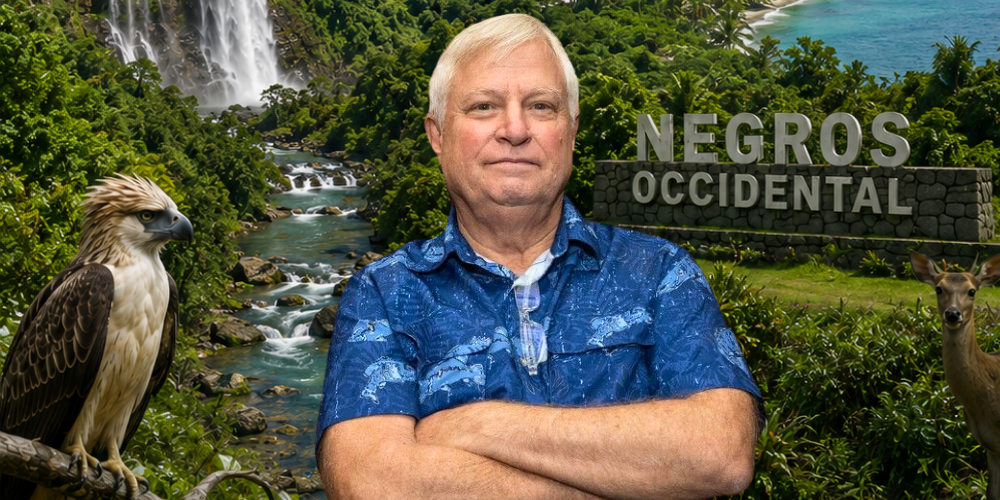
American marine biologist Kent Edward Carpenter, whose research identified the central Philippines as the global peak of marine shore-fish biodiversity, was shot dead inside his home in Sibulan, Negros Oriental, late Sunday, July 12.
Police said three unidentified men wearing face coverings entered Carpenter’s residence in Barangay Ajong at about 11:30 p.m. while the 73-year-old scientist and his 34-year-old Filipina companion were watching television.
One attacker shot Carpenter in the head before the group fled. His companion was injured and underwent medical and forensic examination.
The Police Regional Office in the Negros Island Region formed Special Investigation Task Group Carpenter to investigate the killing. Authorities are reviewing surveillance footage, interviewing witnesses and examining forensic evidence. No suspect or motive has been identified.
Carpenter began working in the Philippines in the mid-1970s as a US Peace Corps volunteer assigned to coral reef research at the Bureau of Fisheries and Aquatic Resources.
In 2005, he and Smithsonian scientist Victor Springer published a landmark study on the distribution of 2,983 marine fish species. Their findings identified the central Philippine islands as the world’s richest area for marine shore-fish diversity and helped establish the country as the “center of the center” of marine biodiversity.
Carpenter also worked with Silliman University, where he supported research and training involving Filipino students and scientists. His work examined the effects of fishing pressure, habitat destruction and climate change on Philippine marine ecosystems.
He later served as an expert witness for the Philippines in its South China Sea arbitration case against China. Carpenter submitted reports and testimony on coral reef destruction, destructive harvesting, dredging and artificial-island construction.
His findings formed part of the evidence considered by the tribunal, which ruled in 2016 that China had caused severe and irreparable harm to coral reef ecosystems.
Police have not connected Carpenter’s killing to his conservation work or role in the arbitration case.