


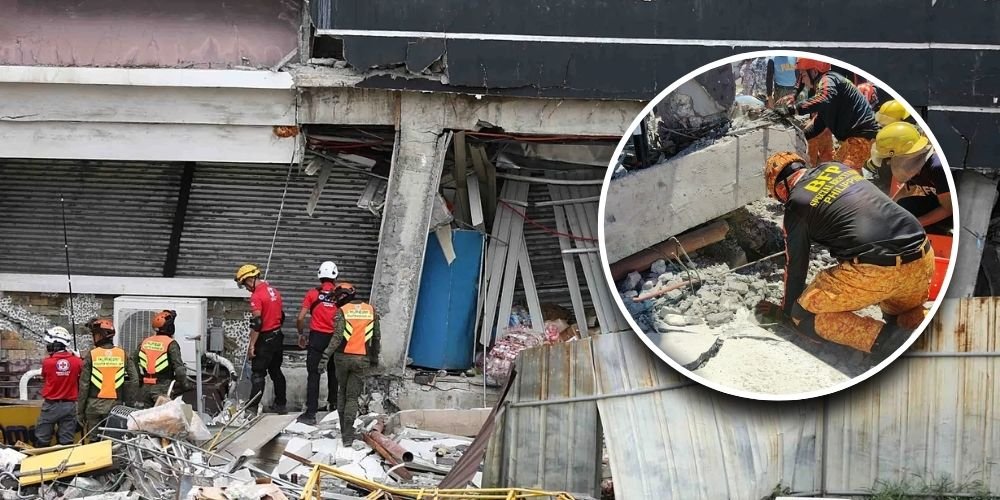
More than 346,000 people across Southern Mindanao are now facing the aftermath of the magnitude 7.8 earthquake that struck off Sarangani on June 8, with 47 deaths reported, dozens still missing, and damage assessments revealing the disaster’s impact on communities across the region.
In its 8 a.m. report on Thursday, the National Disaster Risk Reduction and Management Council (NDRRMC) said the death toll had reached 47, including 35 fatalities in Soccsksargen and 12 in the Davao Region. The agency also reported 688 injured persons. Authorities reported that 31 people remained missing as of Thursday morning as search, rescue, and verification efforts continued.
The earthquake affected 346,449 people, or 75,324 families, across the Zamboanga Peninsula, Davao Region, Soccsksargen, and the Bangsamoro Autonomous Region in Muslim Mindanao. Of that number, 16,349 individuals were staying in evacuation centers, while 29,260 were taking shelter elsewhere.
Authorities also recorded extensive damage to homes and infrastructure. NDRRMC data showed that 12,641 houses were damaged, including 2,289 reported as totally destroyed. At least 37 landslides were recorded in affected areas, while 45 road sections and eight bridges were impacted by the earthquake.
Office of Civil Defense Deputy Administrator Assistant Secretary Raffy Alejandro said casualty figures were still undergoing validation and verification. He also noted that internet and communication disruptions in some affected areas had complicated data gathering efforts as authorities worked to ensure the accuracy of official reports.
The NDRRMC said an airport in Soccsksargen remained non-operational as of Thursday morning, while two affected seaports in the Bangsamoro region had resumed operations. Estimated infrastructure damage had reached P666.5 million.
States of calamity have been declared in Davao Occidental, Glan and Malapatan in Sarangani, and General Santos City. Classes remained suspended in 210 areas, while work suspension orders were still in effect in 113 areas as local governments continued emergency response and recovery efforts.