


Ombudsman Boying Remulla announced plans to establish a budget watch team to investigate officials who allegedly manipulated national spending, following the Supreme Court‘s ruling declaring the 2024 and 2025 national budgets and specific provisions of the 2026 budget unconstitutional.
The Supreme Court, in a decision released on Oct. 20, ruled that Congress violated constitutional spending limits by increasing unprogrammed appropriations in the 2024 budget by ₱449.5 billion and adding ₱17.99 billion to the Department of Public Works and Highways‘ Special Road Fund in 2025.
The Court also invalidated two provisions governing unprogrammed funds in the 2026 budget and flagged a separate ₱12.75-billion increase in special government accounts for violating the Administrative Code.
Remulla said his office would examine the ruling and the corresponding budgets to determine who may be held accountable for the questionable amendments.
“We will study all of that and look at where the fault was and how to make people explain their side or at least be made responsible for what they did,” he said.
He specifically identified funds allegedly parked in different allocations and important government projects transferred into unprogrammed appropriations to accommodate flood control spending.
“Yung mga nakaparada na amounts sa iba’t ibang lugar. Ano yan eh, sign niya na they gamed the budget eh,” Remulla said.
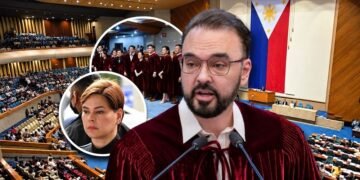
The increases occurred during the congressional budget process under former House Speaker Martin Romualdez’s leadership, with the Court questioning the bicameral conference committee’s failure to document and justify changes to spending allocations.
The SC ruling also identified the Strengthening Assistance for Government Infrastructure and Social Programs (SAGIP) allocation as a prohibited lump-sum fund that became a repository for infrastructure projects, including flood control.
Crucially, the SC clarified that its decision does not automatically protect the authors, proponents, or implementers of unconstitutional budget provisions from criminal, civil, or administrative liability.
Remulla acknowledged that Congress can legitimately amend proposed expenditures but warned that changes made in bad faith involving public money demand scrutiny.
“For the people who gamed the budget, we will study how to go after them,” he said.
The announcement came during the signing of an agreement between the Ombudsman and the Justice Sector Coordinating Committee, attended by Chief Justice Alexander Gesmundo, to strengthen institutional cooperation in combating corruption.
Remulla said the investigation would focus on how appropriations were manipulated, where questionable funds were placed, and which officials were responsible for the changes.