

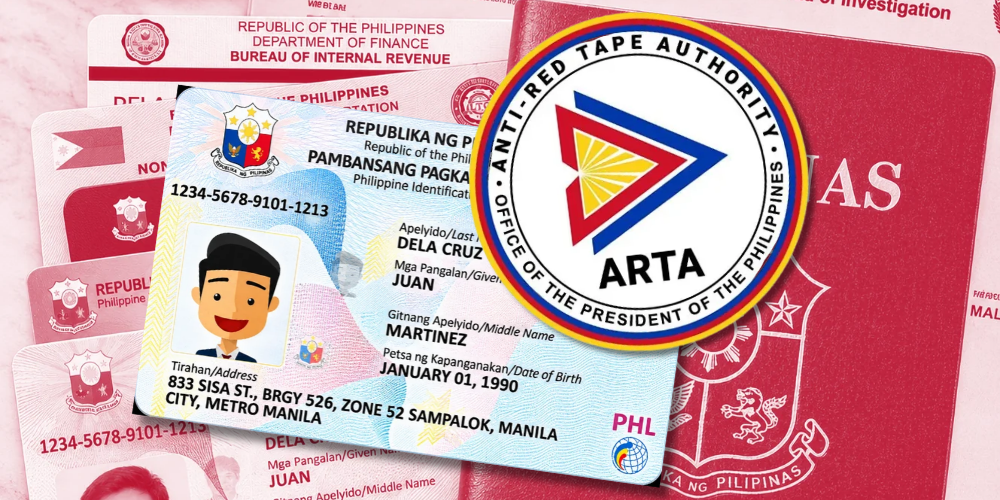
Government offices that demand two valid IDs solely to confirm a person’s identity can be reported to the Anti-Red Tape Authority (ARTA), its director general, Ernesto Perez, said after complaints over unnecessary requirements.
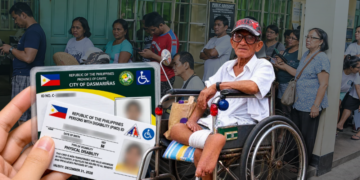
Perez said in a Nov. 6 interview on Unang Hirit that one valid ID should suffice for identity checks, especially the Philippine National ID.
“Inaksyunan po natin ‘yan ‘yung requiring two valid IDs. Bawal na po ‘yon. One valid ID is already sufficient. Lalo na po ‘yung ating National ID. It’s already considered a valid ID,” he said.
Under Republic Act 11055, the Philippine Identification System Act, the National ID or PhilSys Number is sufficient proof of identity in government transactions, subject to proper authentication. Perez also cited Republic Act 11032, the Ease of Doing Business Law, in questioning unnecessary requirements.
The clarification addresses complaints from Filipinos asked to present multiple IDs while transacting with government offices. Perez said agencies should generally refrain from demanding a second ID when a properly authenticated National ID already establishes a person’s identity.
Offices may still require documents proving eligibility, authority or other information needed for a transaction. Perez said those documents must serve a specific purpose rather than duplicate identity checks.
“Kung meron pa rin po kayong ganiyan na experience, mga kababayan, na any government agency, even banks, requiring two valid IDs, i-reklamo po ninyo at makakaasa po kayo na mareresolba natin,” he said.
Perez clarified that the government-service policy covers national agencies and local government units. The National ID law also recognizes its use in private transactions, subject to authentication.
Complaints can be submitted through ARTA’s online portal or complaints@arta.gov.ph.
Perez separately reminded agencies to disclose photocopying charges in their Citizen’s Charters. He also discussed requirements for suitable waiting areas, public assistance desks and priority lanes for senior citizens and persons with disabilities.