


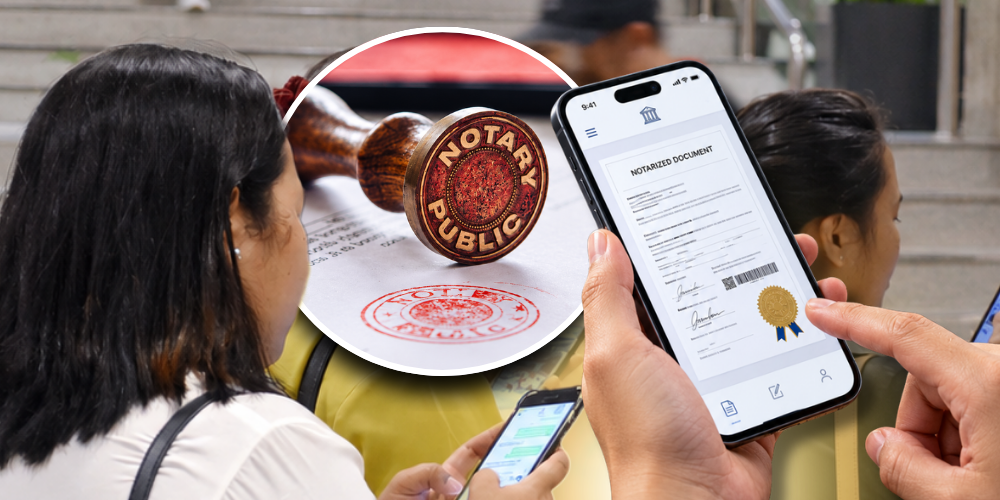
Filipinos can now have eligible documents notarized online without lining up in person, as the Supreme Court launched its nationwide eNotarization service Oct. 19, allowing users to complete the process through a video call with an authorized lawyer.
To use the service, users first create an account on Twala, QLegal or NotarizeIT, the court’s first three accredited platforms. They can choose a commissioned electronic notary from the Supreme Court’s directory or connect with an available notary through their chosen platform.
The signer and any witnesses then appear before the lawyer through the platform’s video call to complete the notarization. Each participant needs a separate account for identity verification. The lawyer can serve signers anywhere in the Philippines, allowing people in different locations to complete the transaction remotely.
Documents must be in PDF or PDF/A format, which can include scanned copies of paper documents. Notarial wills and depositions are excluded. Traditional notarization remains available for paper documents bearing handwritten signatures.
Documents notarized in compliance with the rules carry the “same validity, force, and effect” as those notarized under the 2004 Rules on Notarial Practice, according to the court.
Twala is operated by Ohelio, Inc., QLegal by Quanby Solutions, Inc., and NotarizeIT by UNAWA. These companies provide the digital platforms, while individually commissioned lawyers perform the notarization. Lawyers who already notarize paper documents need a separate electronic notarial commission to offer the service.
The rules require multifactor authentication using methods such as facial recognition, biometrics and one-time passwords. Electronic notarial records must be protected against tampering, while stored personal data is subject to the Data Privacy Act.
Ahead of the launch, the court held an Oct. 13 signing ceremony for joint circulars with the Land Registration Authority and the Securities and Exchange Commission. These establish guidelines for accepting and processing electronically notarized documents in land-registration and corporate transactions.
Registration links, the list of commissioned electronic notaries and instructional videos are available on the Supreme Court’s eNotarization website.