


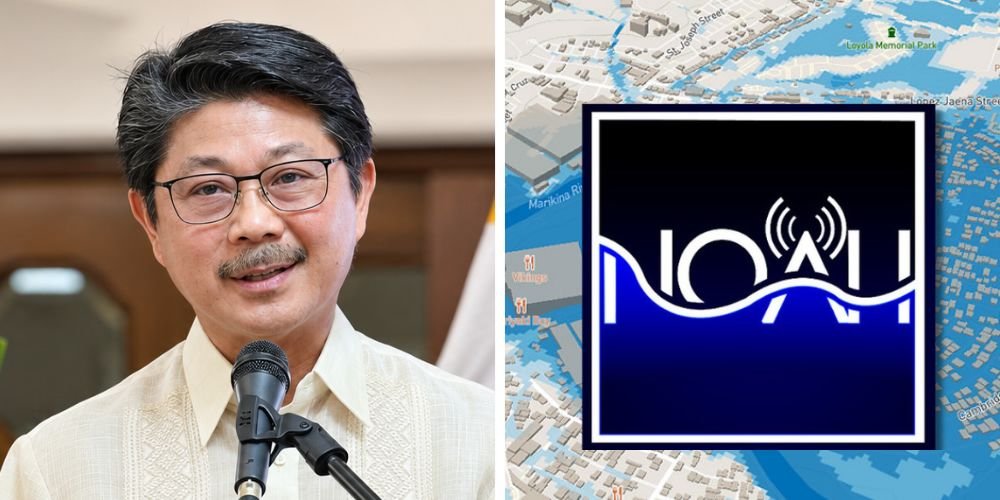
House Speaker Faustino “Bojie” Dy III is pushing for additional funding for Project NOAH under the proposed ₱7.20-trillion 2027 national budget, acknowledging that its ₱1-billion allocation in 2026 remains insufficient to address the country’s growing vulnerability to climate-related disasters.
Speaking at the Philippine Summit on Localizing Climate Change in Isabela on Nov. 25, Dy said the 20th Congress had worked to secure funding for the initiative, recognizing the importance of scientific research and technology in protecting communities and reducing disaster-related losses.
“I know that this funding is not enough, so we are again working to provide additional funding for Project NOAH in the 2027 national budget to further strengthen our support for the program and help ensure the safety of our people,” Dy said.
Launched in 2012 under the DOST (DOST), Project NOAH, or the Nationwide Operational Assessment of Hazards, is now operated by the University of the Philippines (UP) Resilience Institute. It uses satellite imagery, historical records and scientific simulations to identify areas susceptible to flooding, landslides and storm surges.
Its publicly accessible hazard maps allow residents to assess risks in their neighborhoods while helping local governments identify evacuation sites, improve land-use planning and determine suitable locations for critical infrastructure.
Dy highlighted the particular vulnerability of agricultural communities, where prolonged droughts threaten rice production and farmers’ incomes, while flooding displaces families and damages properties and sources of livelihood.
The Speaker said his support for Project NOAH began after UP President Angelo Jimenez and UP Resilience Institute Executive Director Mahar Lagmay presented the program to him upon assuming the speakership.
Dy also urged government officials, scientists, educators and community leaders to strengthen cooperation in developing climate-resilient infrastructure, protecting natural resources and implementing science-based disaster prevention measures.