

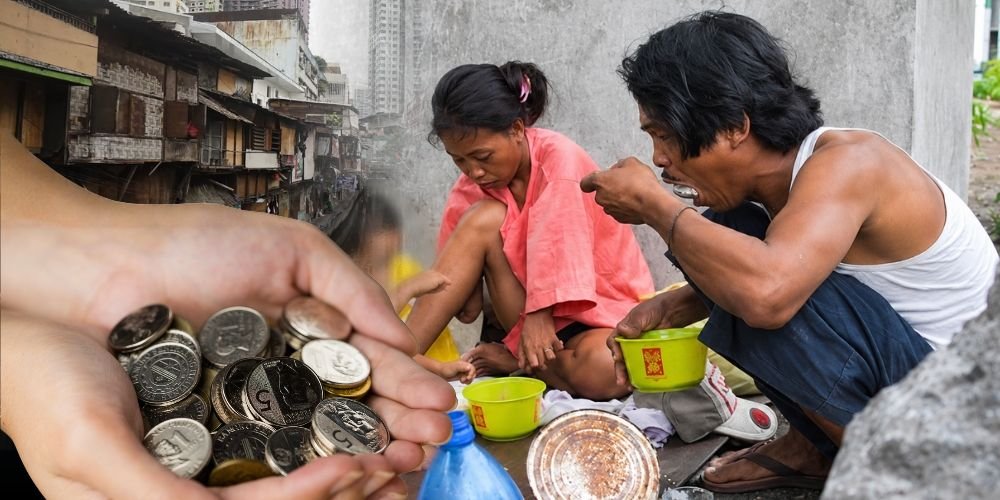
The Philippine Statistics Authority (PSA) faced backlash after reporting that Filipinos earning more than ₱96.22 daily are considered above the national poverty threshold under its 2025 data. For a family of five, the monthly threshold is ₱14,634, which represents the estimated minimum income required to cover basic food and nonfood needs.
The Philippines recorded a poverty incidence of 9.7% in 2025, down from 15.5% in 2023. The improvement means approximately 6.46 million fewer Filipinos were classified as poor, although millions of households remain vulnerable to rising living costs and unexpected financial difficulties.
Approximately 11.08 million Filipinos remained below the poverty line, compared with 17.54 million in 2023. The PSA attributed the improvement largely to income growth outpacing increases in the cost of basic necessities. Average annual income per person rose by 22% between 2023 and 2025, while the poverty threshold increased by 5.5%.
Economist Leonardo Lanzona Jr. questioned whether the poverty threshold accurately reflects current living conditions, citing concerns about its outdated methodology. Researchers from the Philippine Institute for Development Studies also found that the country’s official poverty line remains below benchmarks associated with its upper-middle-income classification.
ACT Teachers Party-list Rep. Antonio L. Tinio challenged the findings, describing the report as outdated and disconnected from the daily struggles of Filipinos. He argued that rising prices, stagnant wages, and limited employment opportunities continued to burden households, questioning whether the reported decline accurately reflected their economic conditions.
Department of Economy, Planning, and Development Secretary Arsenio Balisacan acknowledged the need to review the poverty measurement methodology but favored temporarily retaining the existing system to maintain consistency in tracking poverty reduction.