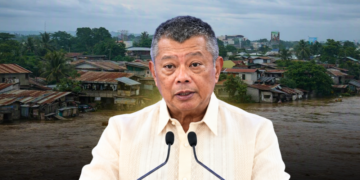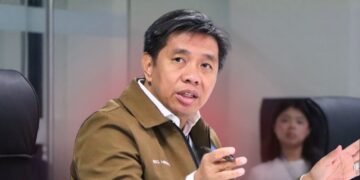


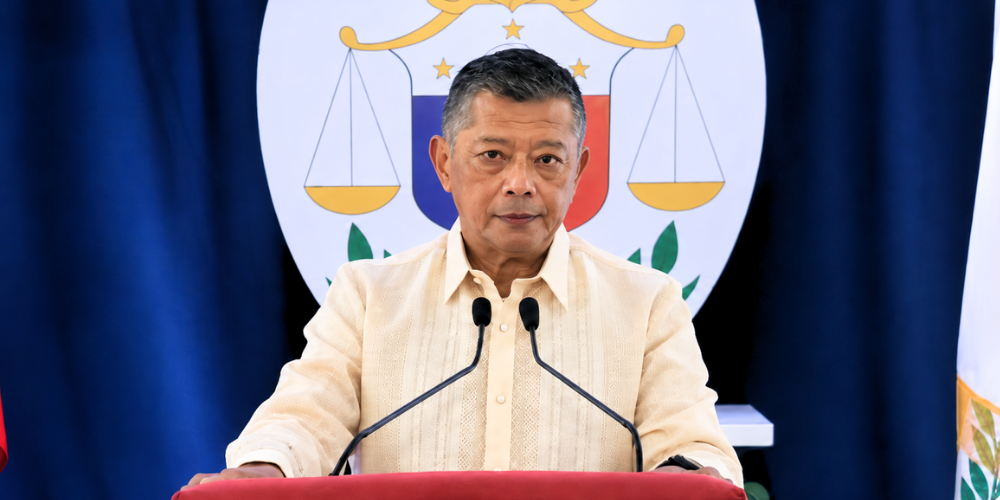
Marking his first year in office, Boying Remulla signaled the next phase of his anti‑corruption campaign, declaring that the Office of the Ombudsman will now focus on recovering stolen public funds to help the country’s struggling economy.
Remulla’s first year was defined by major case filings tied to flood‑control and infrastructure corruption, including charges against former Speaker Martin Romualdez, Sen. Jinggoy Estrada, former Sen. Bong Revilla, former Rep. Zaldy Co, and Uswag Ilonggo Rep. James “Jojo” Ang Jr. Beyond ghost infrastructure, his office is also probing ghost internet and ghost solar projects.
“Accountability was the focus of our first year. Recovery will be the focus of the next,” Remulla said in his first annual report as Ombudsman.
“Corruption does not only steal from the treasury; it steals from the economy. That’s why our next focus is to help our economy bounce back by removing the corruption that holds it back.”
The Department of Finance previously estimated that irregularities in flood control projects caused ₱42.3 billion to ₱118.5 billion in economic losses from 2023 to 2025, potentially costing the country up to 266,000 jobs. Meanwhile, national government debt reached ₱19.61 trillion as of August, while inflation climbed to 7.2% in September, further squeezing Filipino households.
The economic strain is also hitting households directly. Inflation surged to 7.2% in September 2026, up from 1.7% a year earlier, driven by rising food, housing, utilities, and transport costs.
Philippine law requires officials found guilty of graft, malversation, or plunder to return stolen funds, with plunder convictions—covering ill‑gotten wealth of at least ₱50 million—mandating forfeiture to the State. Separately, under Republic Act 1379, civil forfeiture petitions can target property “manifestly out of proportion” to lawful income, a track with a lower burden of proof.
To prevent assets from vanishing, the Anti‑Money Laundering Council can seek freeze orders, the Sandiganbayan can order property attachments, and the Commission on Audit can demand repayment of improper expenditures. Some cases end in plea bargains trading repayment for lesser charges. The Constitution guarantees the State’s right to recover unlawfully acquired property never expires, though recovery remains difficult as assets are hidden through relatives, shell firms, or moved abroad.
Remulla said the next phase will highlight how corruption damages the broader economy—driving away investors, distorting markets, and raising costs that burden ordinary consumers and businesses.
Appointed Ombudsman on Oct. 7, 2025, Remulla serves a fixed seven‑year term until 2032. Before his appointment, he was the country’s 59th Justice Secretary, represented Cavite’s 7th District in Congress, and held posts as governor and lawyer. He earned his political science and law degrees at the UP Diliman, graduating from law school in 1987.