


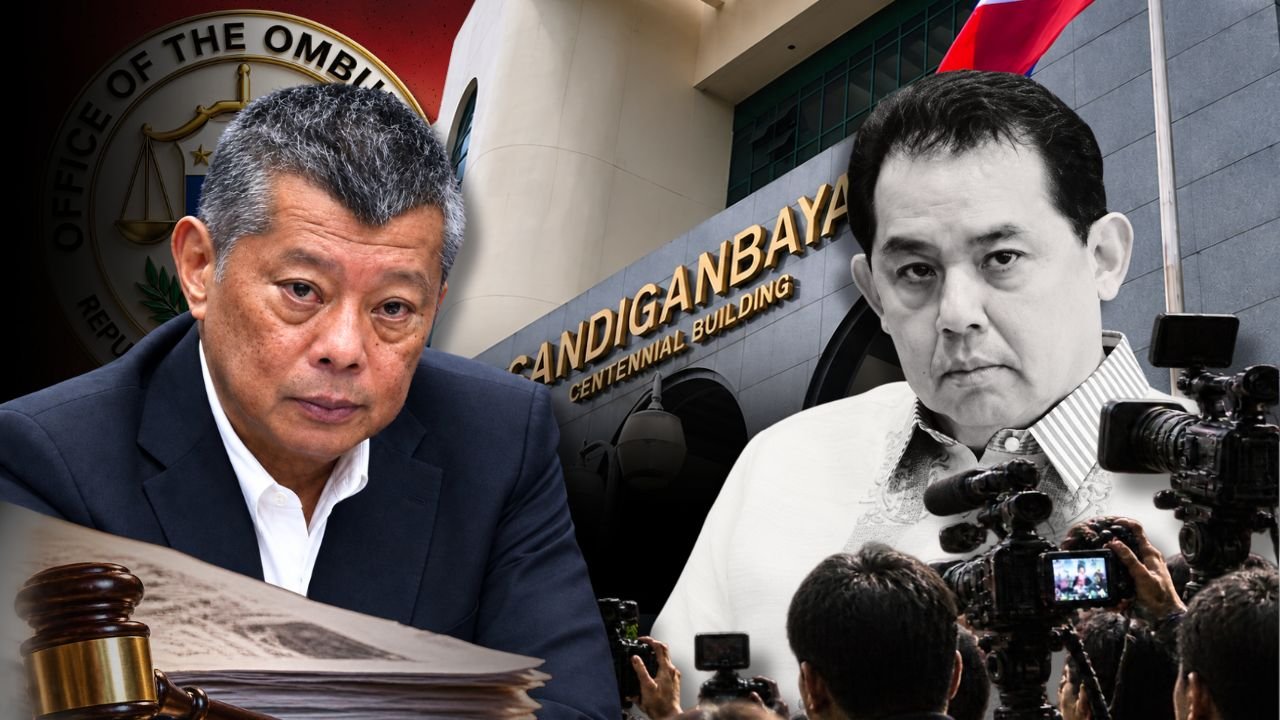
Ombudsman Boying Remulla delivered his boldest anti‑corruption strike yet—filing non‑bailable plunder charges against former House Speaker Martin Romualdez. But as that valiant step was taken, the Sandiganbayan must ensure it does not fumble the chase for accountability against the flood control corruption mastermind.
After months of investigations marked by twists, bribes, witness testimonies, and recantations, the Ombudsman filed a plunder charge for ₱7.4 billion in ill-gotten wealth—148 times the ₱50-million minimum threshold for plunder. Remulla said the case was only the start of a series of cases that will include more plunder and money laundering charges.
Remulla’s efforts must not go to waste. The Sandiganbayan, the country’s special anti‑graft court, must make sure the “master plunderer” spends the rest of his life behind bars—just as the Filipino people demand. That demand is clear in PGMN’s heavy‑hitting barrage of exposés against Romualdez, which racked up 230 million views across 2,042 posts—the most viral anti‑corruption campaign ever mounted against a single figure in Philippine social media history.
Even as Romualdez scrambled to fight back, filing more than 80 lawsuits against PGMN, the nonstop stream of content exposing him only grew louder and more relentless.
Remulla recently warned that long‑running delays, reversals, and legal obstacles in corruption cases have crippled accountability, stressing that institutions tasked with justice must examine their own failures.
“As a lawyer, it’s not really common for lawyers to complain about the courts. But sometimes we just have to raise that issue already because it can be the biggest elephant in the room, within our justice system,” Remulla said.
He has rightfully raised concerns about the judiciary, saying it needed “soul‑searching,” pointing to corruption cases before the Sandiganbayan that languished for 15 years before being dismissed for inordinate delay. He also flagged a “worrying trend” of Ombudsman decisions later overturned by the Court of Appeals.
The plunder charge against Martin Romualdez has been raffled off to the Sandiganbayan’s 3rd Division. That’s the same division that granted Bong Revilla bail after he posted a ₱1‑million bond in his flood‑control malversation case.
Revilla was arrested in 2014, detained for four years without bail, then acquitted of plunder in 2018 after the Sandiganbayan ruled the prosecution’s evidence insufficient. Revilla was later dragged back into court over a ₱92.8‑million ghost flood‑control project in Bulacan—an empty lot masquerading as infrastructure—but the Sandiganbayan’s 3rd Division still granted him bail, freeing him in July 2026 after he posted a ₱1‑million bond. Remulla warned that backroom efforts may have been made to secure that bail, and the Ombudsman had already predicted it, calling the episode part of a “battle” in the wider “war” against systemic corruption.
Assistant Ombudsman Mico Clavano has described Romualdez’s case as a “master case” and a “grand conspiracy to defraud the treasury.” Now, as charges move closer to the courtroom, the spotlight shifts to the Sandiganbayan. The anti‑graft court faces one of the most consequential corruption cases in Philippine history—billions in stolen public funds, and allegations against one of the country’s most powerful political figures.
Remulla has said the anti‑corruption campaign is a painful process, requiring dismantling a culture of entitlement among elites who believe wrongdoing will go unanswered. As the flood‑control scandal reaches the judicial stage, the Sandiganbayan faces the very question Remulla has raised from the start: Will the justice system be strong enough to deliver accountability when billions and power are at stake?
For the Sandiganbayan, this is a defining moment—one that will decide whether public trust in the fight against corruption is strengthened or shattered. The country will be watching closely. Every Filipino knows the crimes Romualdez committed, and the people will erupt in fury if justice is denied.