

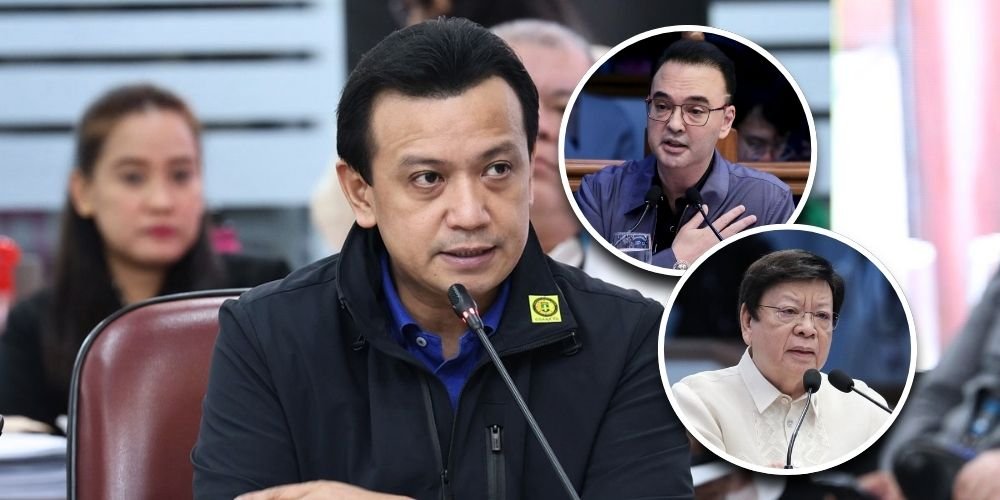
Former senator Antonio “Sonny” Trillanes IV’s cyberlibel complaint against Senators Alan Peter Cayetano and Rodante Marcoleta has turned a Senate flood-control inquiry into a direct test of legislative oversight.
The case stems from the testimony of 18 men who claimed knowledge of alleged cash deliveries linked to flood-control funds and former Ako Bicol Rep. Zaldy Co. Their claims remain disputed. Officials they named have denied wrongdoing. Trillanes has also denied the allegations against him and brought the matter to the Department of Justice.
Cayetano and Marcoleta, however, were doing what senators in an inquiry are supposed to do. They allowed witnesses to testify on allegations involving public money, infrastructure projects, and possible corruption. They did not declare the accusations proven. They placed the claims on record so they could be questioned, checked, and weighed against evidence.
That distinction is central to the controversy. A Senate hearing is designed to surface testimony and compel answers. It does not replace a trial. It does not erase due process. It gives the public a formal venue to see how serious allegations are handled.
Marcoleta’s own action after the hearing reinforced that point. He suspended the flood-control probe until further notice because more evidence had to be gathered and verified. That move showed the inquiry was not being rushed into a conclusion.
Cayetano also raised concerns over the treatment of the witnesses after they were invited to a separate hearing. “Recent threats of arrest directed at participants, and the involvement of various government agencies in matters touching these testimonies, have raised legitimate concern for the treatment of witnesses and for an atmosphere fit for the search for truth,” he said.
Trillanes has the right to defend his name through the courts. Cayetano and Marcoleta also have a duty to pursue testimony tied to public funds. Their role was to hear, scrutinize, and verify. In a corruption probe, that is the job.