


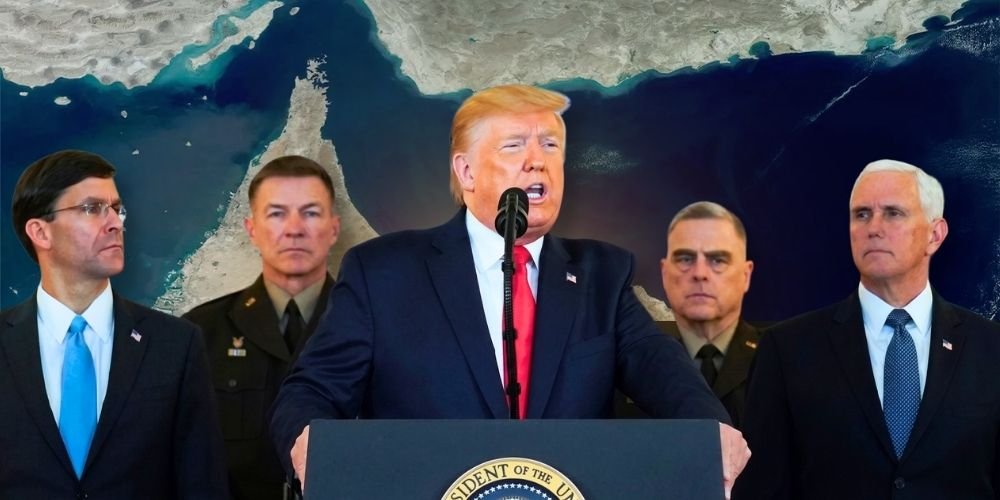
President Donald J. Trump extended the United States ceasefire with Iran on Tuesday, keeping a two week truce alive just hours before it was due to expire and putting his administration’s next move at the center of a fast-moving crisis that now stretches from Washington to Tehran to Islamabad.
Trump said the extension came at Pakistan’s request as it tries to keep both sides in talks. In a Truth Social post, he said US forces would “remain ready and able, and will therefore extend the Ceasefire until such time as their proposal is submitted, and discussions are concluded, one way or the other.” He also made clear that the US would keep its blockade of Iranian ports in place while waiting for what he described as a unified proposal from Iran.
That decision matters because the ceasefire had been set to expire on Wednesday, and both sides had already warned that fighting could resume without a deal. Earlier on Tuesday, Trump had signaled he did not want an extension and warned that if talks failed, the US was prepared to strike again. Iran, for its part, said it would not negotiate “under threat and force,” while officials in Tehran said there was still “no final decision” on whether to attend another round of talks in Islamabad.
Pakistan emerged as a key player in the latest push to prevent the war from reigniting. Trump said Pakistan’s army chief, Field Marshal Asim Munir, and Prime Minister Shehbaz Sharif asked Washington to hold off on further attacks. Sharif later thanked Trump for accepting the request and said Pakistan would continue efforts for a negotiated settlement. Pakistani officials also tightened security in Islamabad as possible talks approached.
The dispute remains tied to the Strait of Hormuz, one of the world’s most critical energy routes. The US says it wants vessels to move freely through the waterway. Iran has treated control of the strait as leverage during the war. That standoff has raised the stakes far beyond the battlefield because a major share of global oil and gas shipments passes through that corridor, and the tension has already pushed oil prices sharply higher.
Iranian officials have made clear that the blockade remains a major obstacle. Iran’s ambassador to the United Nations said Tehran had received some sign that the US might be ready to stop the blockade, but ending it remains a condition for returning to talks. Iranian officials also condemned recent US actions at sea, including the seizure of vessels, calling them violations of the ceasefire and even acts of piracy. One Iranian official said the country “unequivocally rejects and condemns” the US move.
The rhetoric on both sides shows how fragile the pause remains. Trump said earlier that “lots of bombs” could “start going off” if no agreement is reached. Iranian officials answered with warnings of their own. One senior commander threatened broader damage to the region’s oil industry if war resumes. Another said Iran was ready to reveal “new cards on the battlefield.”
For the public, the stakes are direct and immediate. This is no longer just a distant military standoff. It affects oil prices, shipping, fuel costs, and the risk of a wider regional war. Trump’s announcement bought more time, but it did not resolve the core fight over Iran’s nuclear program, its regional influence, or control of a waterway that helps keep the global economy moving. The ceasefire is still standing, but the pressure points that brought both sides to the edge remain fully in place.