

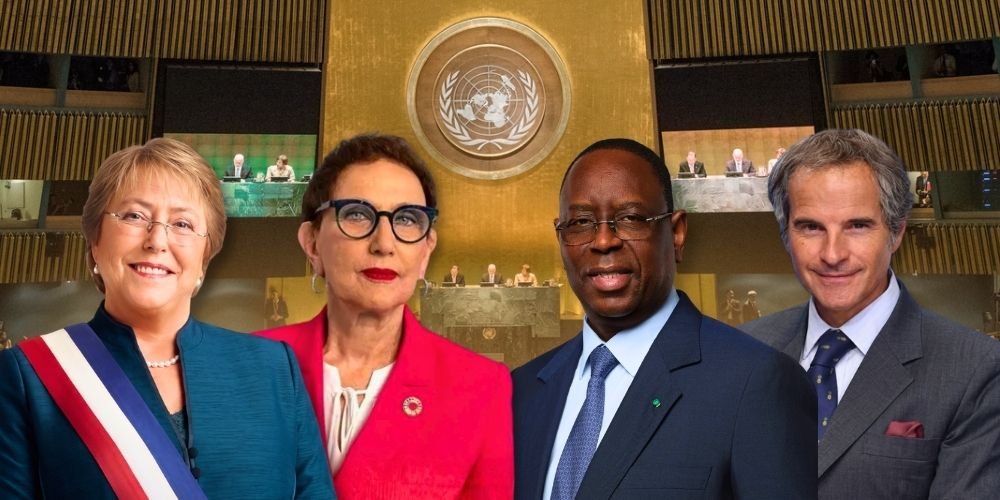
The United Nations has entered a high-stakes race for secretary-general with only four candidates stepping forward, a sharp decline from the 13 who competed 10 years ago, reflecting a more cautious and tense global climate around the post.
Former Chilean President Michelle Bachelet will face ambassadors from the U.N.’s 193 member states first in a three-hour question-and-answer session on Tuesday. She will be followed by International Atomic Energy Agency Director General Rafael Mariano Grossi. On Wednesday, U.N. Trade and Development chief Rebeca Grynspan will take the stage, followed by former Senegalese President Macky Sall.
The hearings come as Secretary-General António Guterres enters the final stretch of his second five-year term, which ends Dec. 31, 2026. The next leader will assume office at a time when divisions among major powers continue to limit the United Nations’ ability to act on global conflicts.
Wars in Ukraine, Gaza, and Iran have underscored the limits of the Security Council, where veto power held by the United States, Russia, China, Britain, and France has blocked action on major crises. The same body will decide who advances, with the General Assembly formally appointing the next secretary-general based on its recommendation.
International Crisis Group program director Richard Gowan said the political climate has reshaped the race. “There was no real cost associated with losing,” Gowan said. “This time around, potential candidates and the governments who sponsor them are much more cautious. There is a feeling that if a candidate puts a foot wrong and offends Washington or Beijing, it could cause real diplomatic damage.”
Bachelet’s bid has already drawn resistance in Washington. In a March 25 letter to Secretary of State Marco Rubio, 28 Republican lawmakers urged the United States to veto her. U.S. Ambassador to the United Nations Mike Waltz said, “I share your concerns.”