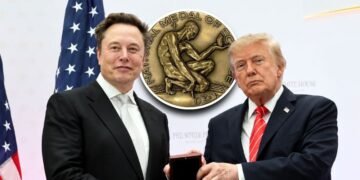


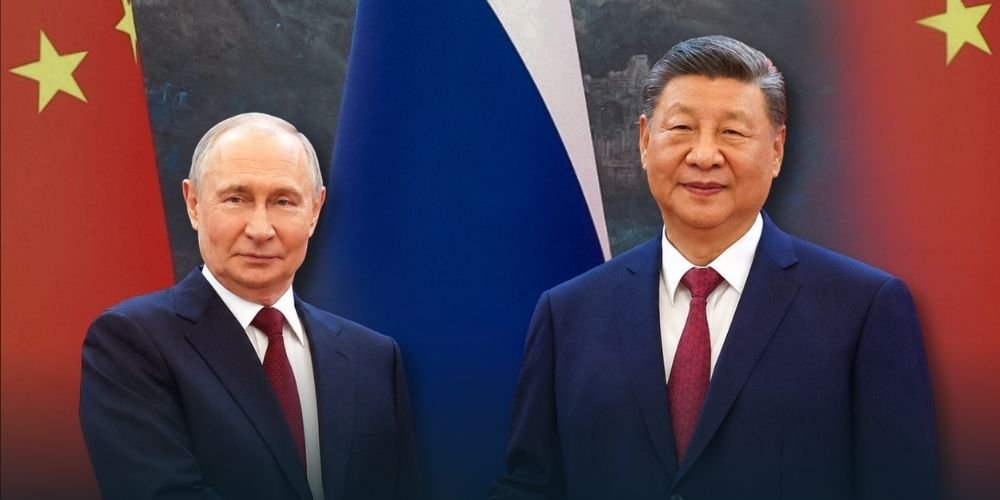
Chinese President Xi Jinping welcomed Russian President Vladimir Putin to the Great Hall of the People in Beijing on Wednesday for a state visit, describing the China-Russia partnership as a force for “calm amid chaos” in a thinly-veiled rebuke of US foreign policy delivered less than a week after Xi hosted US President Donald Trump in the same city. The optics — red carpet, joint statement, signed agreements — drew an explicit contrast with the Trump visit, which produced no comparable signed joint declaration.
In his opening remarks, Xi said “the international situation is marked by intertwined turbulence and transformation, while unilateral hegemonic currents are running rampant.” Putin, seated across from him, said “even against the backdrop of unfavourable external factors, our interaction and economic cooperation demonstrate strong momentum.” The two sides signed a package of cooperation documents across economic, infrastructure, cultural, and strategic areas, according to international reports.
The meeting unfolded against a sharply weaker Russian position than during Putin’s prior Beijing visit in September 2025. Ukraine launched what Russian state media described as the largest drone attack on Moscow in more than a year days before Putin’s departure, which Russian officials said was part of a broader wave in which 556 Ukrainian drones were intercepted across Russia, with Moscow Mayor Sergei Sobyanin reporting 81 drones headed for the capital, while analysts have pointed to a slowdown in Russian advances and some recent net territorial losses, per Institute for the Study of War assessments. Xi’s framing of the relationship as “calm” sits awkwardly against that backdrop — and against the public Trump-Xi handshake the previous week, where Taiwan arms sales and Hong Kong activist Jimmy Lai were on the agenda but no comparable signed joint declaration emerged.
For the Philippines, the optics matter. Manila is a treaty ally of the United States under the 1951 Mutual Defense Treaty and an active claimant in the West Philippine Sea, where Chinese maritime activity has intensified. A reaffirmed China-Russia bloc framed explicitly against US “hegemony” complicates the diplomatic ground Manila is operating on. Energy was a major topic of discussion, though Reuters reported no breakthrough on the long-discussed Power of Siberia II pipeline, with pricing and timing still unresolved. The energy discussions matter for global pricing expectations, but the direct line to Philippine power costs should not be overstated.
Putin’s state visit concluded with no announcement of an immediate Xi visit to Moscow. The next major multilateral setting where both leaders are expected to appear is the BRICS summit later this year in New Delhi.