

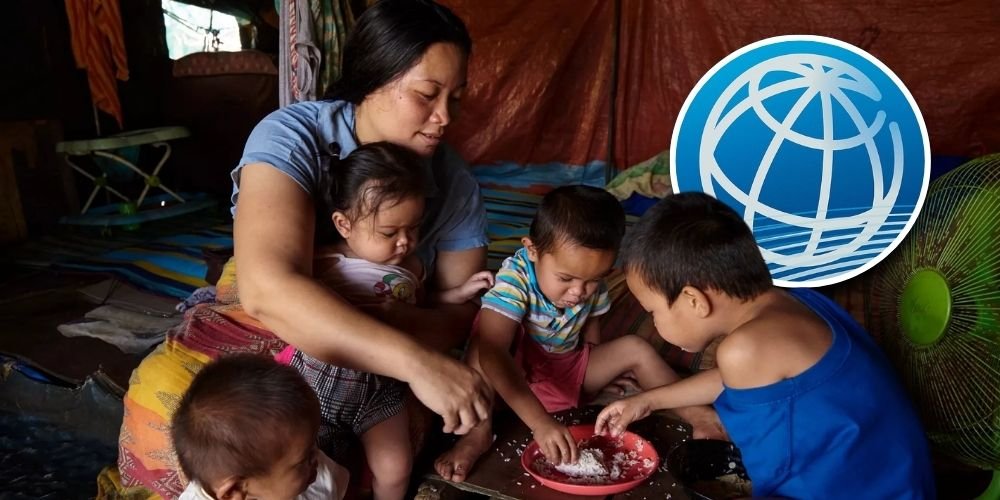
The World Bank warned that the Philippines’ weak first-quarter growth could eventually lead to weaker household incomes and higher food prices if the slowdown in construction and agriculture persists while inflation and energy costs remain high.
The warning followed the Philippine economy’s 2.8% growth in the first quarter of 2026, slower than the previous quarter’s 3%. Inflation also climbed to 7.2% in April from 4.1% in March, as the economy faced pressure from an energy price shock.
The World Bank said the slowdown was broad-based. Growth in services moderated, while agriculture and industry contracted year-on-year. It highlighted construction and agriculture because both sectors employ large numbers of lower-skilled and informal workers and are closely tied to household incomes among poorer Filipinos.
The World Bank warned that a prolonged downturn in these sectors could weaken labor income growth and push food prices higher, especially since food accounts for a large portion of household spending among poor Filipinos.
Economist Jonathan Ravelas said the Philippines is still not experiencing stagflation because the economy continues to expand, though he cautioned that the risks are becoming more difficult to dismiss.
“There are potential stagflation risks, but we’re not there yet. Since the third quarter, the Philippine economy still recorded positive economic growth. So there’s still no talk of recession,” Ravelas said.
He also told reporters, “Medyo malayo pa tayo. Tsismis pa lang yan sa tingin ko, because we’re still growing at 2.8%.”
Ravelas said consumer spending will be crucial, warning that the full impact of rising prices may still be coming. “Tataas pa talaga [ang presyo]. Kumbaga di pa natin nararamdaman yung bagsik ng pagtaas ng mga presyo,” he said.
He urged the government to restore policy credibility, assist businesses through COVID-like relief measures, strengthen energy and food strategies, and address political issues affecting investor confidence, including the impeachment process and investigations into the flood control scandal.