

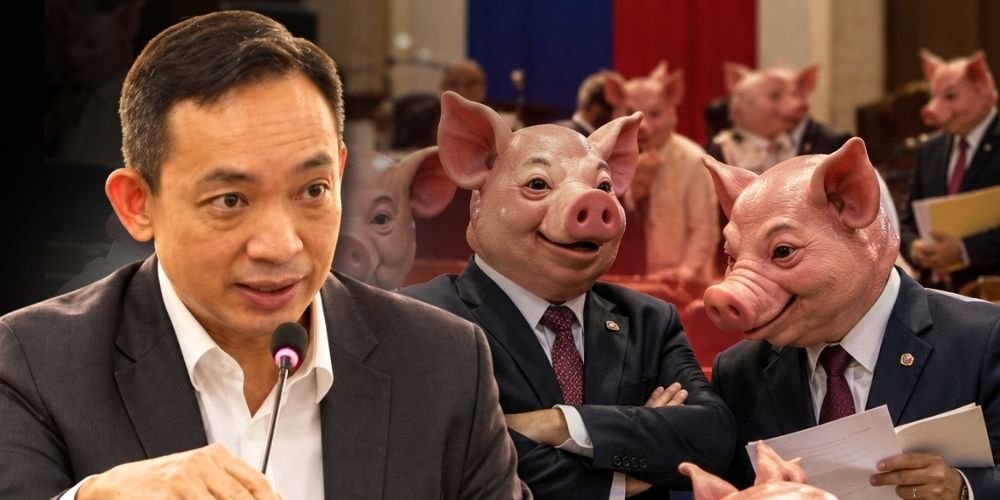
ACT Teachers party-list Rep. Antonio L. Tinio has flagged approximately ₱180 billion in possible pork barrel allocations in the proposed 2027 national budget, questioning the addition of 6,212 infrastructure projects and the wide funding disparities among congressional districts.
Tinio, a House deputy minority leader, accused House leadership of using infrastructure funds to reward political allies and disadvantage lawmakers outside its political circle. His office’s review found that some districts received substantial increases while others were allotted considerably smaller amounts.
The additional projects brought the number of Department of Public Works and Highways (DPWH) budget line items to 16,720. Tinio’s analysis of 198 district engineering offices found that some received increases worth billions of pesos, while the 10 lowest-funded offices were allotted less than ₱150 million each.
“This shows that the pork barrel system as a carrot-and-stick is very much alive and kicking,” Tinio said,
claiming that allocations depended on lawmakers’ political connections and cooperation with the administration.
A separate review by the People’s Budget coalition found that the DPWH central office’s allocation was reduced by ₱42 billion, while 158 district engineering offices gained a combined ₱54 billion. The findings indicated a shift in infrastructure funding toward local offices.
University of Makati public administration professor Ederson Tapia said Congress has the authority to revise budget allocations, but warned that discretionary spending could enable political patronage when funding decisions lack sufficient justification or transparency. He emphasized the need to examine how projects were selected and who would benefit.
Tinio called for the publication of the complete list of additional projects, including their locations and proponents, to allow public scrutiny of the changes.
The House approved the proposed ₱7.2-trillion budget on second reading on Oct. 7, with a third and final reading scheduled for Oct. 12. The measure will then undergo Senate review and reconciliation between both chambers before being submitted to President Bongbong Marcos.