

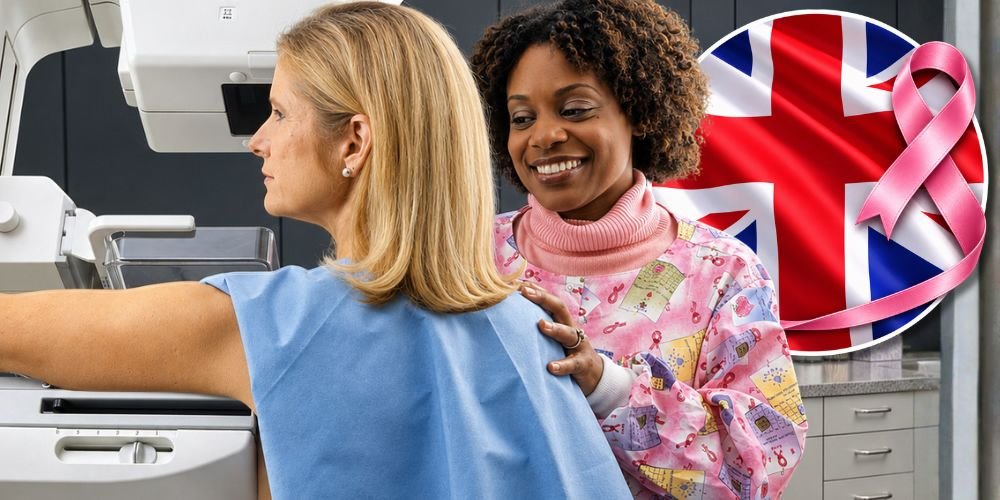
Nearly 700,000 women across the United Kingdom are set to participate in the world’s largest artificial intelligence breast cancer screening trial, testing whether AI can detect early signs of the disease more accurately and accelerate diagnosis.
The £10-million study, known as Early Detection using Information Technology in Health (EDITH), will examine how AI can identify subtle abnormalities in mammograms, or breast X-rays, that may indicate cancer before symptoms develop.
Recruitment has begun at Cambridge University Hospitals, the first of 30 screening centers expected to participate across the UK over the next three years. The trial is led by the University of Warwick, the University of Cambridge, and Cambridge University Hospitals NHS Foundation Trust in partnership with NHS England.
Under the current National Health Service (NHS) screening system, two specialists independently examine each mammogram for possible signs of cancer. The trial will test whether AI can take over one of those reviews while maintaining oversight from a qualified medical professional.
Researchers will assess whether the technology can identify cancers earlier, reduce diagnostic delays, and prevent unnecessary follow-up examinations caused by false alarms.
“AI-assisted technology could help improve early cancer detection but we want to avoid the overdiagnosis of milder disease that would never have caused symptoms,” said Professor Sian Taylor-Phillips of the University of Warwick, one of the trial’s lead investigators.
The study comes as the UK faces increasing demand for breast cancer screening services. Approximately 59,000 women are diagnosed with breast cancer annually, while more than two million undergo routine mammograms each year.
Britain’s screening program invites women aged 50 to 71 for mammograms every three years. The NHS estimates that regular screening prevents approximately 1,300 breast cancer deaths annually by identifying the disease at stages when treatment is generally more effective.
Professor Fiona Gilbert of the University of Cambridge said the technology could ease pressure on medical specialists as imaging workloads continue to increase.
“Technology can make reviewing these images more efficient, freeing up specialist breast radiologists to spend more time caring for patients with cancer, supporting faster diagnosis and earlier treatment,” Gilbert explained.
Participating women will continue receiving their usual breast screening appointments. The trial will focus on how their mammogram images are analyzed, with at least one medical specialist reviewing every scan.
AI systems will examine the images using algorithms trained to recognize patterns associated with breast cancer. Researchers will compare the technology’s performance with established screening procedures to determine whether it can safely improve detection rates.
The study also aims to address shortages of specialist radiologists, which have placed increasing pressure on the NHS as demand for medical imaging rises.
UK Health Secretary Yvette Cooper emphasized the importance of testing the technology before introducing it more widely.
“AI has huge potential to improve treatment, which is why we need trials like this to ensure we are using it in the most effective way with proper safeguards,” Cooper said.
Funded by the National Institute for Health and Care Research, the trial could influence how breast cancer screening is conducted across the UK if researchers establish that AI-assisted reviews are safe and effective.