

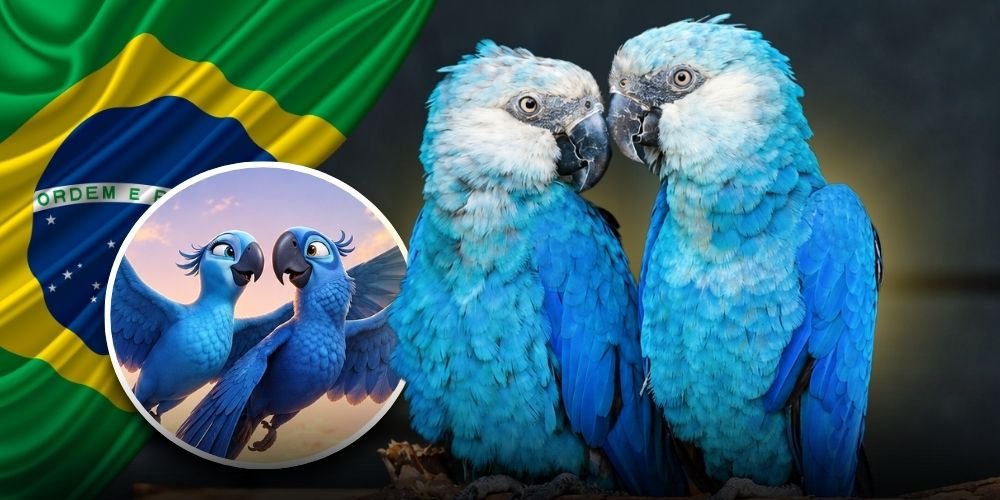
The Spix’s macaw, the real-life blue bird behind Blu and Jewel in the 2011 film Rio, has achieved a milestone once considered almost unreachable. After disappearing from Brazil’s wild in 2000, captive-bred birds returned to the Caatinga in 2022 and, within a year, hatched chicks there for the first time in more than 30 years.
The species had been driven down by illegal trapping, habitat destruction, agricultural expansion and dams. By 1990, only one known bird remained in the wild. It was last recorded in October 2000, leaving the species dependent on captive populations for survival.
Rio later carried that crisis to a global audience. Its story followed Blu, a captive-raised Spix’s macaw brought to Brazil to meet Jewel, portrayed as the last wild female of their species.
Years of breeding, genetic management and habitat protection eventually made a return possible. In two releases in 2022, conservationists freed 20 captive-reared Spix’s macaws in Bahia with 15 blue-winged macaws. The native birds helped them adjust to finding food, moving through the landscape and responding to danger.
Researchers recorded 58.3 percent first-year survival and 85 percent flock cohesion. Several Spix’s macaws formed pairs and explored nest cavities. One pair hatched two chicks. One fledged, marking the first recorded wild fledging by the species in more than 30 years, although both chicks later died.
“They are acting as a flock,”
US Fish and Wildlife Service biologist Tom White said after the first release.
“It’s going as well as it possibly could.”
The comeback remains fragile in 2026. Brazil’s ICMBio still considers the species extinct in nature. As of September 15, officials were monitoring 34 birds positive for circovirus while 69 that tested negative remained in quarantine.
The reintroduction program continues, carrying forward a recovery built from the few birds that survived captivity.