

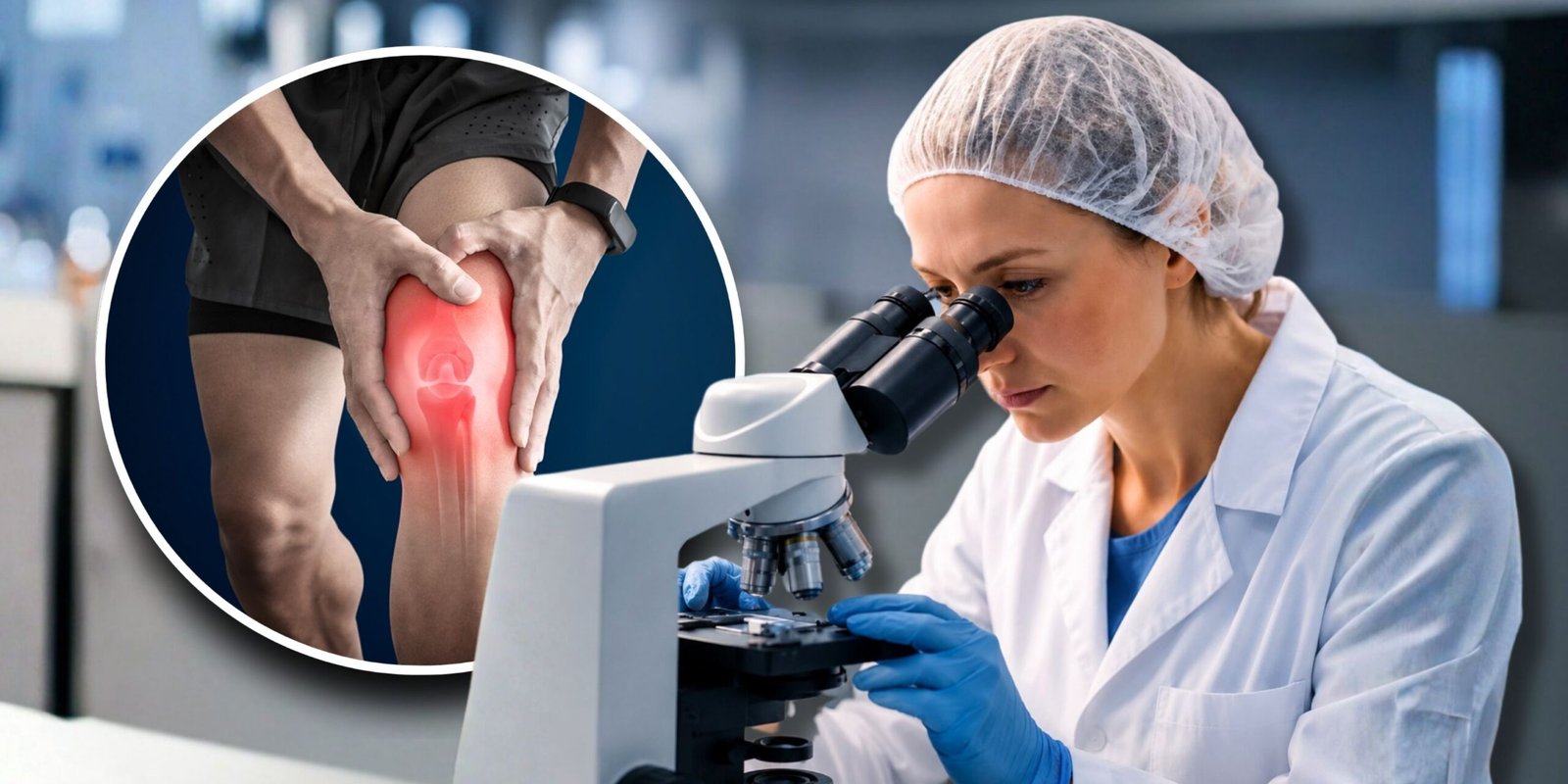
A Stanford Medicine-led team has reported an advance in arthritis research after an experimental treatment restored lost knee cartilage in older mice, helped prevent arthritis after knee injuries, and triggered repair signals in human cartilage samples tested in the lab.
The treatment blocks 15-PGDH, an aging-linked protein that rises in old or injured cartilage. Researchers describe it as a gerozyme because it becomes more active with age and contributes to weaker tissue function. Blocking it helped existing cartilage cells shift toward a younger, healthier state without relying on stem cells.
The potential impact reaches far beyond one country. The World Health Organization estimates that about 528 million people were living with osteoarthritis in 2019. The disease wears down articular cartilage, the smooth tissue that cushions joints, causing pain, stiffness, swelling, and difficulty moving. Current care often focuses on symptom control, and severe cases can end in knee or hip replacement because no approved drug can reverse the cartilage loss behind the disease.
In older mice, body-wide treatment and direct knee injections both thickened cartilage worn down by age. Tests showed the new tissue was hyaline cartilage, the smooth type needed for normal joint movement.
The team also tested the treatment after knee injuries resembling ACL tears. Mice treated twice weekly for four weeks were far less likely to develop osteoarthritis, walked more normally, and placed more weight on the injured limb.
Human cartilage samples from knee replacement patients also responded after one week, showing fewer cartilage-damaging signals and early signs of new articular cartilage formation.
“This is a new way of regenerating adult tissue, and it has significant clinical promise for treating arthritis due to aging or injury,” said Helen Blau, PhD.
Human arthritis trials are still needed, but the finding gives researchers a sharper path toward repairing damaged joints before replacement becomes the last option.