


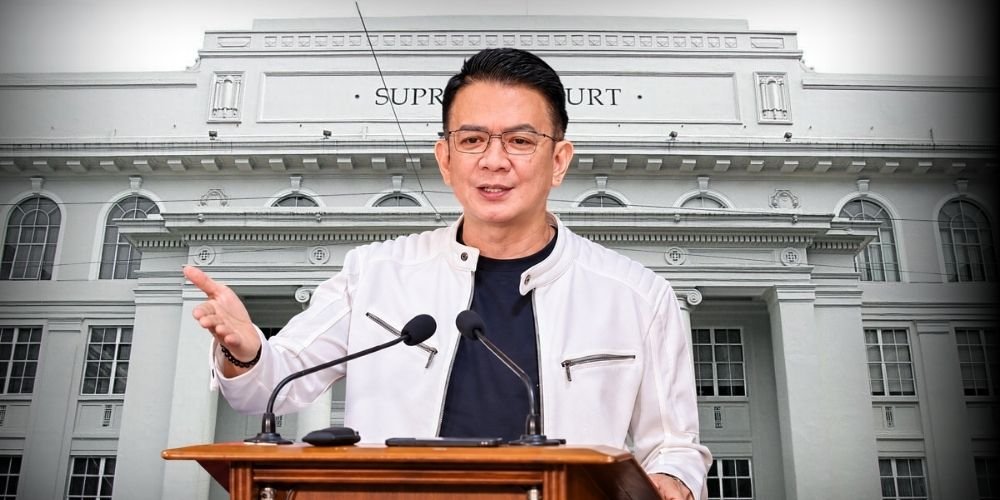
Congress may have to abandon its long-standing practice of expanding the national budget through unprogrammed appropriations following a Supreme Court ruling that limits lawmakers’ power to increase spending beyond the President’s proposed budget, Senator Chiz Escudero warned on Sunday, October 25.
Speaking on the 14th episode of his program Chiz Wiz: Usapang May Laman, Escudero said the decision could reshape deliberations on the 2027 national budget by requiring lawmakers to account for unprogrammed funds within the spending ceiling proposed by the executive branch.
“We have to adjust. We can no longer follow the old practice of making the budget bigger than what the government proposed by using unprogrammed funds,” he said.
The scale of these appropriations became particularly evident in the 2024 national budget, when Congress increased unprogrammed funds from approximately ₱282 billion in the President’s proposal to ₱731.4 billion, an increase of ₱449.5 billion. The 2025 budget, meanwhile, initially carried ₱531.67 billion in unprogrammed appropriations, nearly ₱200 billion less than the previous year’s enacted allocation, before presidential vetoes further reduced the amount.
Although the 2025 allocation was smaller, both budgets demonstrated the enormous sums placed under unprogrammed appropriations, which provide funding for programs and projects subject to specific conditions before their release.
Escudero explained that the practice extended beyond these two budgets, with previous Congresses similarly adding unprogrammed funds on top of the executive branch’s proposed spending plan.
“What previous Congresses did—not just in 2024, but also in 2023, 2022, 2021 and earlier years—was to add unprogrammed funds on top of the programmed budget proposed by the president,” he said.
The Supreme Court ruled that such appropriations must be included in calculating the total budget, citing Article VI, Section 25 of the Constitution, which prohibits Congress from increasing the appropriations recommended by the President for government operations.
The decision also invalidated certain conditions governing the release of unprogrammed funds, raising questions about projects financed through previously approved budgets.
However, Escudero cautioned that the ruling has yet to become final. The Office of the Solicitor General may seek reconsideration, giving the Court an opportunity to clarify or modify its decision.
“It could be changed, or it could remain the same,” he said. “So the question is, what will be the effect on the money that has already been spent?”
Escudero explained that completed projects would be difficult to reverse, particularly because the Court had not issued a temporary restraining order. Projects covered by the prohibition but not yet implemented, however, should no longer proceed once the ruling becomes final, in his view.
With the Senate reviewing the House-approved spending plan, Congress must now decide whether to continue previous budgeting practices while awaiting the Court’s final decision or adjust the 2027 budget to comply with the ruling.