


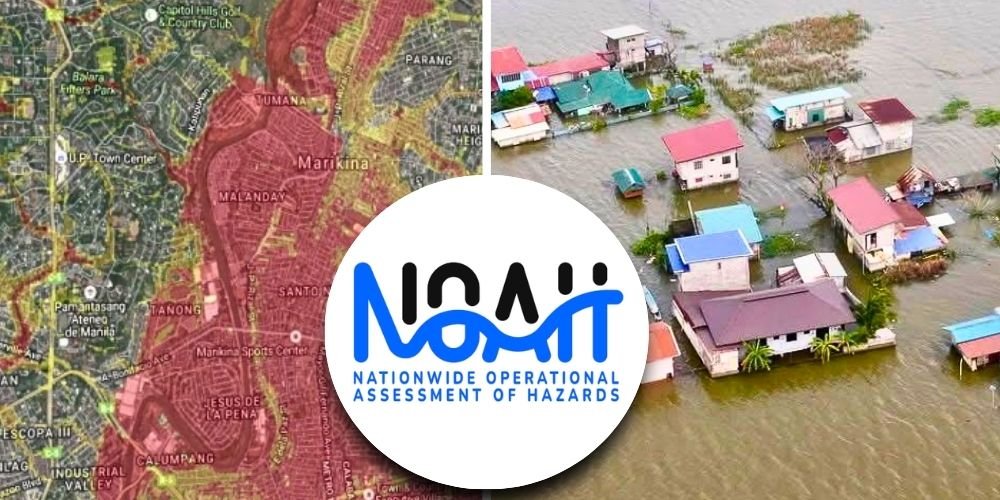
The government is investing ₱1 billion in technology designed to identify flood risks before communities face rising waters. The Department of Budget and Management released the funds to strengthen Project NOAH’s AI-powered forecasting and hazard monitoring.
The University of the Philippines System will receive the funding through its 2026 appropriation. Authorities aim to use better hazard information for earlier warnings and disaster preparation.
Project NOAH, or Nationwide Operational Assessment of Hazards, operates under the UP Resilience Institute (UPRI). It supports disaster risk reduction, climate adaptation, and hazard assessment through research and technology.
The program uses artificial intelligence (AI), LiDAR mapping, data analytics, and other digital tools. These technologies generate real-time hazard assessments and predictive flood scenarios for national agencies and local governments.
Of the ₱1 billion, ₱935 million will support research services. Meanwhile, ₱65 million will cover management and supervision.
The funding will also finance ICT, digital, technical, and scientific equipment. It will support specialized personnel and operational systems needed to strengthen hazard forecasting.
“Hindi natin kailangang hintayin na tumaas ang tubig bago tayo kumilos,” DBM Acting Secretary Kim Robert C. De Leon, on disaster prevention.
He said authorities should identify danger, vulnerable communities, and necessary action before disasters strike.
DBM said stronger forecasting can help protect lives, livelihoods, infrastructure, and public investments. Better information can also help authorities prepare and act earlier.
Previously, DBM partnered with UP NOAH through the Digital Information for Monitoring and Evaluation (Project DIME). The initiative helps assess government infrastructure projects for exposure and resilience to natural hazards.
The latest funding expands Project NOAH’s capacity to turn hazard data into earlier warnings, better planning, and faster action.