

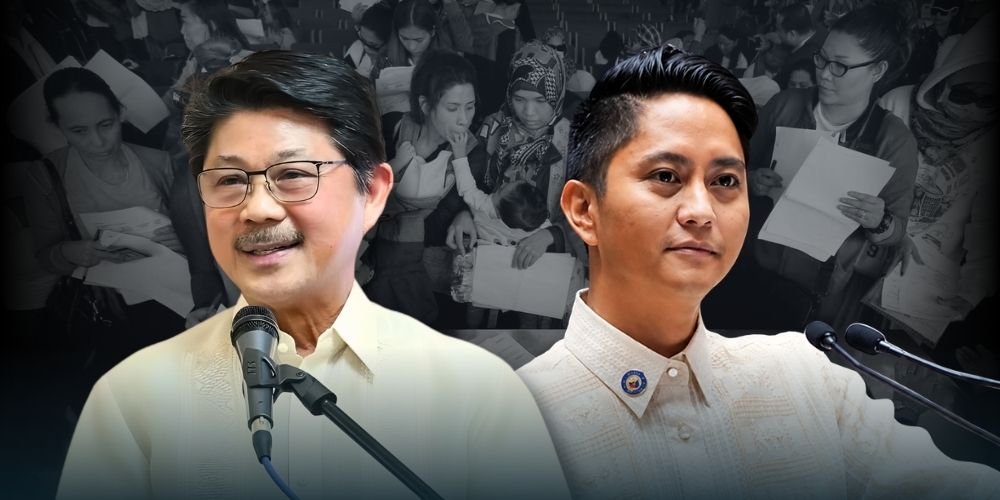
House Speaker Faustino “Bojie” Dy III and Majority Leader Sandro Marcos moved to convert President Bongbong Marcos’s SONA tax relief proposal into legislation by filing House Bill No. 10345, which would expand the zero-percent income tax bracket to annual taxable income of up to ₱350,000.
The measure would raise the current ₱250,000 threshold by ₱100,000, allowing covered workers to retain more of their earnings as household expenses continue to strain family budgets. The existing exemption was established under the TRAIN Law, which took effect in 2018.
“President Marcos SONA placed tax relief where families will feel it, in the pay they bring home after every cutoff, and Speaker Bojie Dy has made sure the House responds with a bill rather than applause alone. Raising the tax-free ceiling to P350,000 gives workers more room for food, tuition, medicine and the bills that do not wait,” Sandro said.
Under the proposal, annual taxable income above ₱350,000 but not exceeding ₱400,000 would fall under the 15-percent bracket. The graduated rates of 20 percent, 25 percent, 30 percent and 35 percent would continue to apply to higher income ranges.
HB 10345 would preserve existing income tax exemptions for minimum wage earners, including holiday pay, overtime pay, night shift differential and hazard pay. Married individuals would continue calculating their respective income taxes separately, while income that cannot be attributed exclusively to either spouse would be divided equally.
Qualified self-employed individuals and professionals could still choose the optional eight-percent tax on gross sales, receipts and non-operating income exceeding the proposed threshold, subject to the conditions under the tax code. Mixed-income earners would remain covered by graduated rates on compensation and the applicable tax system for business or professional income.
“The President’s SONA gave us a clear standard: tax policy must remain responsible while recognizing how much the cost of living has changed, and Speaker Bojie Dy shares that practical approach. This measure updates the brackets for workers, professionals and small entrepreneurs so the tax code reflects present realities,” Sandro added.