

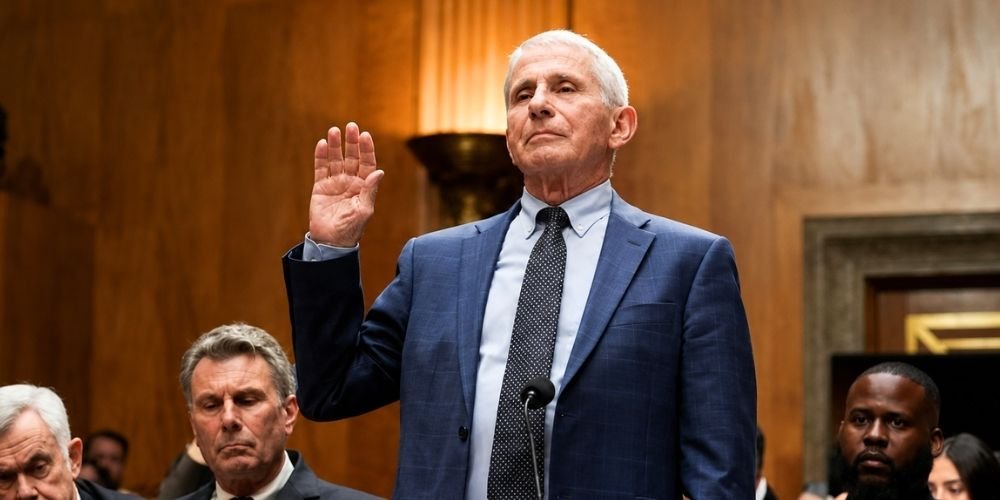
Former U.S. infectious disease chief Anthony Fauci declined to answer more than 100 times while repeatedly invoking the Fifth Amendment during a July 29 Senate hearing. Lawmakers questioned him about COVID-19 origins, U.S.-funded research in Wuhan, his pandemic decisions and whether his previous testimony to Congress was truthful.
Fauci appeared under subpoena before the Senate Homeland Security and Governmental Affairs Committee. Republican lawmakers accused him of misleading Congress when he denied that the National Institutes of Health funded gain-of-function research at the Wuhan Institute of Virology.
Committee Chairman Rand Paul has also accused Fauci of helping suppress scrutiny of a possible laboratory origin for COVID-19 and of giving misleading testimony about research supported by U.S. funds. Fauci denies lying, rejects claims of a cover-up and says the disputed work did not meet the government’s formal definition of gain-of-function research.
Fauci did not answer the accusations during the hearing and repeatedly invoked his constitutional protection against self-incrimination. He said Paul had repeatedly demanded his prosecution and was attempting to obtain testimony that could be used to support those demands. Fauci’s lawyer described the investigation as an “obsessive vendetta.”
The hearing grew more contentious when Paul ordered Fauci’s lawyer removed after the attorney attempted to speak without being recognized. Paul later said the committee would consider holding Fauci in contempt.
Former President Joe Biden issued Fauci a pardon in January 2025 covering possible federal offenses committed between January 1, 2014, and January 19, 2025, connected to his government service. The pardon does not cover later conduct, including any potentially false statements made after it was issued.
Invoking the Fifth Amendment is a constitutional right and does not prove guilt. But after years of presenting himself as a leading public authority during the pandemic, Fauci’s refusal left Americans without clear explanations about decisions, funding and testimony that shaped a defining public health crisis.