


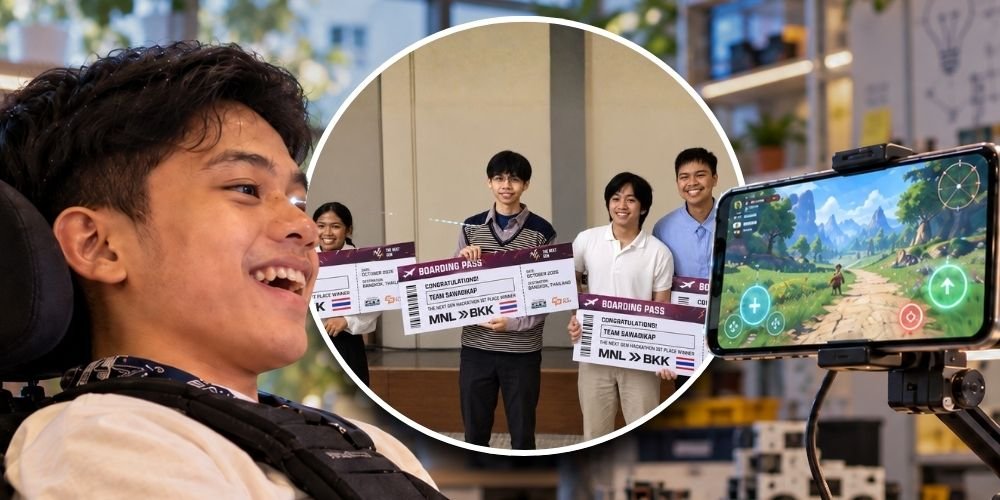
Four Filipino students have built an AI-assisted app designed to give people with motor disabilities something touchscreen gaming can deny them—the ability to play without using their hands.
Their invention, PWDe, opens a potential route into mobile gaming for people whose limited hand movement makes tapping, swiping or holding down buttons difficult or impossible. These controls can determine whether someone can participate at all, regardless of their interest in the game.
Developed by Saint Louis University’s Team Sawadikap, PWDe addresses both hands-free play and the technical setup needed to make it work. Its GabAI feature can automatically identify and map buttons in supported games from a single screenshot, removing the need to configure each button manually, according to the university’s September 30 report.
GabAI uses computer vision, a form of artificial intelligence that recognizes information in images. In this case, it reads the game screen and locates its controls. Automating that task helps address another accessibility barrier, the technical knowledge needed to prepare an assistive tool before a person can even begin playing. SLU said the feature was designed to make PWDe accessible to users who may not be tech-savvy.
The students behind the project are Jecquar Ravent Aguilan, Jared Eizen Facun, Edgardo Miguel Gagarin and Gelina Tibayan. Their work earned Team Sawadikap the championship at the Philippine Collegiate Championship “The Next Gen 2026” in Parañaque on September 27, with a score of 93.
More than 50 teams nationwide submitted proposals. Five advanced to a 48-hour hackathon, where finalists were tasked with turning their ideas into minimum viable products, early working versions demonstrating their proposed solutions. SLU secured the top two places, with Team AI’m Ready finishing second.
PWDe’s competition success establishes a milestone for the student project. Its button-mapping feature works with supported games, although SLU’s report did not identify those titles or announce a public release date.
For its intended users, wider access to the technology could mean greater independence in a familiar part of everyday life. Being able to control a game could open opportunities to pursue a hobby, compete and share an activity with friends, with controls adapted to how they can play.