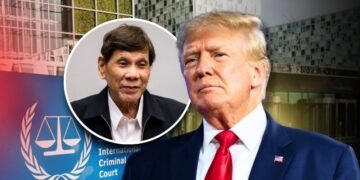


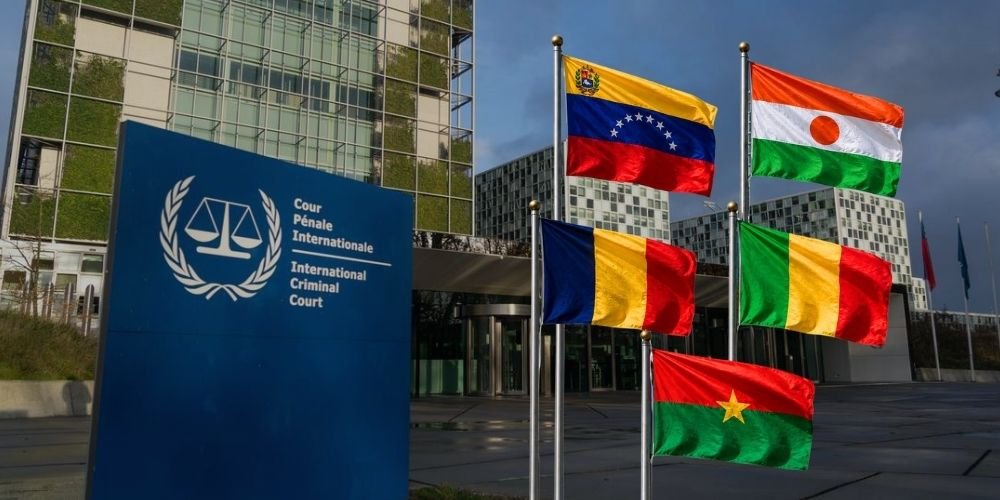
Five countries have announced or formally begun the process of withdrawing from the International Criminal Court, adding to mounting pressure on the tribunal after the United States declared its intention to dismantle the court.
Burkina Faso, Mali and Niger accused the ICC of applying selective justice and serving as a tool of neocolonial repression. The three military-led governments said they would instead pursue accountability through domestic or regional mechanisms.
Chad questioned the court’s effectiveness and what it described as its disproportionate focus on African nations. Venezuela, meanwhile, accused the ICC of geographic and political bias against countries in Africa, Latin America and the broader Global South.
The United Nations has officially received withdrawal notices from Niger, Burkina Faso, Mali and Chad. Their departures will take effect one year after the notices were submitted. Venezuela said it had also notified the U.N. of its decision, although it had not yet appeared on the organization’s published withdrawal list as of Aug. 4.
The Philippines remains one of only two former ICC member states—alongside Burundi—to have completed its withdrawal. The Duterte administration submitted its notice in March 2018, weeks after the ICC opened a preliminary examination into killings linked to the government’s anti-drug campaign. The country’s withdrawal became effective in March 2019.
Leaving the ICC did not remove the court’s jurisdiction over alleged crimes committed while the Philippines was still a party to the Rome Statute. Ex-President Rodrigo Duterte was transferred to ICC custody in March 2025, and in April this year, judges confirmed three counts of murder as crimes against humanity against him. His trial in The Hague is scheduled to begin on Nov. 30. The confirmation of charges is not a finding of guilt.
U.S. Secretary of State Marco Rubio, a leading Republican contender for the 2028 presidential election, described the ICC as an “illegitimate international organization.” He argued that the court’s assertion of authority over non-member states could expose American troops and political leaders to arrest years after leaving office.