


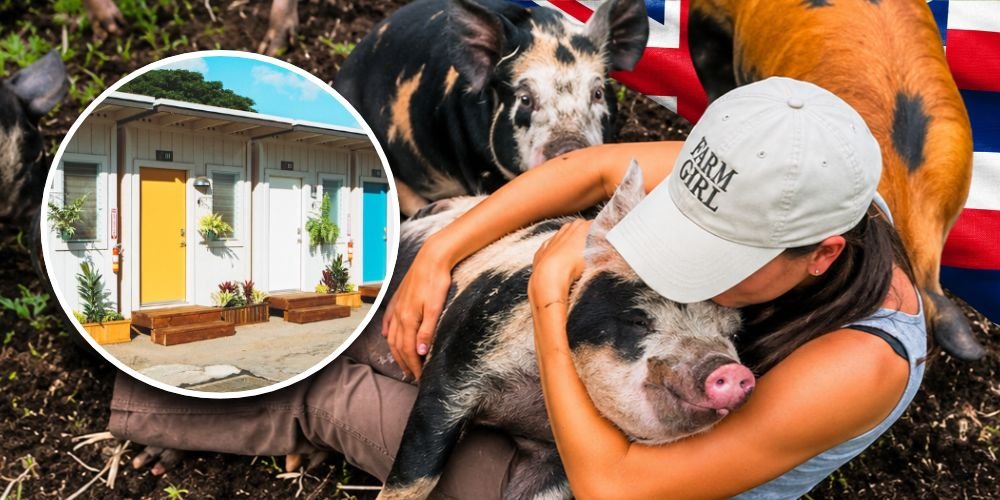
Living in Hawaii without paying monthly rent is possible through animal sanctuary work-trade programs that exchange housing for hands-on care of rescued animals.
One of the opportunities is at Selah’s Pig Sanctuary in Keaau on Hawaii’s Big Island, where the nonprofit is seeking a live-in pig caretaker to help care for rescued pigs while staying on the property. The sanctuary currently invites applicants to “Come work with us” and apply for its “Live-In Pig Caretaker” role.
Recent recruitment details for the program describe housing as part of the compensation for about 20 hours of sanctuary work each week. The arrangement has included utilities, Wi-Fi and basic amenities, while applicants are generally expected to cover their own food, travel and personal expenses.
The work goes beyond spending time with animals. Caretakers may be responsible for feeding and watering pigs, checking their health and behavior, cleaning shelters and bedding, maintaining enclosures, helping with landscaping and composting, and providing enrichment and socialization.
Selah’s Pig Sanctuary describes its mission as providing “a safe harbor for pigs in need” while promoting better relationships between people, animals and the environment.
The sanctuary began after founder Joanna Bloese took in an orphaned piglet named Selah shortly after moving to Hawaii. After Selah later died, Bloese decided to establish the sanctuary and keep her five piglets together.
“Sanctuary life chose us,” Bloese wrote while recounting how the rescue eventually grew into the organization.
Selah’s is not the only Hawaii sanctuary using housing to attract animal-care volunteers. Magical Creatures Sanctuary in Laupahoehoe currently recruits live-in volunteers to care for more than 90 rescued animals including pigs, cows, goats, sheep, chickens and ducks. Its program provides shared housing while volunteers handle feeding, cleaning and enrichment.
Kaua‘i Animal Welfare Society also advertises a live-in work-trade position for an experienced rescue animal handler, explicitly offering “FREE RENT in exchange for animal care services.”
The opportunities come with conditions. These are working volunteer arrangements rather than free vacations, and eligibility, schedules, housing conditions and length of stay vary by sanctuary. International applicants also need to verify whether their immigration status permits the type of volunteer or work-trade activity involved.