

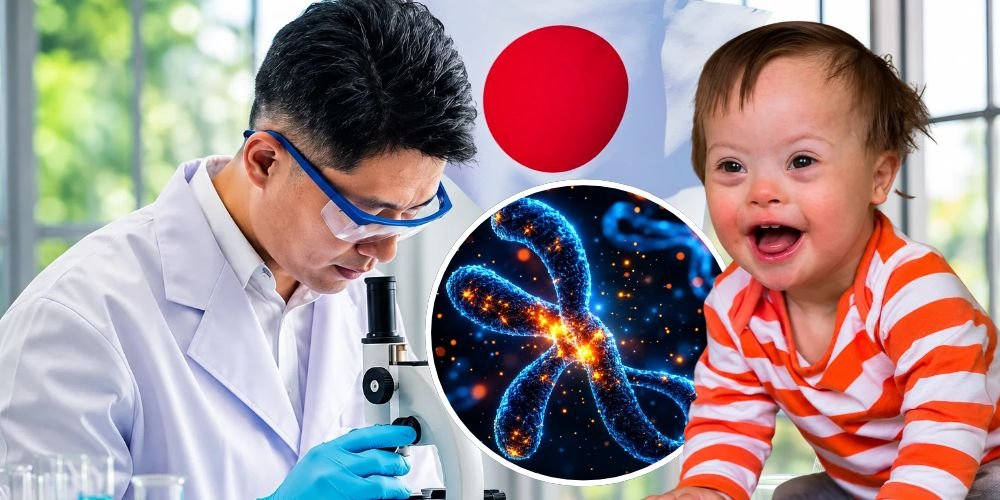
Japanese scientists have successfully removed the extra chromosome responsible for Down syndrome from human cells, marking a major breakthrough in genetic engineering that could pave the way for future treatments targeting the condition before or after birth.
Researchers at Mie University in Japan developed a technique using CRISPR-Cas9 gene-editing technology to identify and eliminate the additional copy of chromosome 21, which causes Down syndrome.
The research, led by Dr. Ryotaro Hashizume and published in the scientific journal PNAS Nexus on Feb. 18, 2025, demonstrated that scientists could selectively remove an entire chromosome from human cells under laboratory conditions.
Down syndrome occurs when a person has three copies of chromosome 21 instead of the usual two. The genetic condition develops before birth and affects physical and intellectual development. It can also increase the likelihood of congenital heart defects, hearing difficulties and other medical complications.
Using CRISPR-Cas9, researchers identified genetic sequences unique to one of the three chromosome copies and designed a system to eliminate the additional chromosome while preserving the remaining two.
The team achieved a removal success rate of up to 37.5% under specific experimental conditions. Cells that successfully lost the extra chromosome showed improvements in gene activity, growth rates and antioxidant function.
Mie University described the findings as a “significant step towards establishing a technique to eliminate the extra chromosome itself,” highlighting the possibility of developing medical interventions that address the underlying genetic cause of Down syndrome.
The procedure was tested on human induced pluripotent stem cells and skin-derived fibroblasts obtained from individuals with Down syndrome. Researchers also demonstrated chromosome removal in nondividing cells, expanding the potential applications of the technology.
The discovery raises the possibility of developing treatments that could address chromosomal abnormalities during early development. Down syndrome can already be detected before birth through prenatal screening and diagnostic procedures, although no approved treatment currently exists to remove the additional chromosome from a developing fetus.
The researchers emphasized that their findings remain experimental. The technique has yet to be tested as a treatment in humans, and further studies are needed to address unintended genetic changes and the challenge of safely delivering gene-editing technology to affected cells.
Mie University said the approach could eventually contribute to preventing or improving complications associated with Down syndrome.