


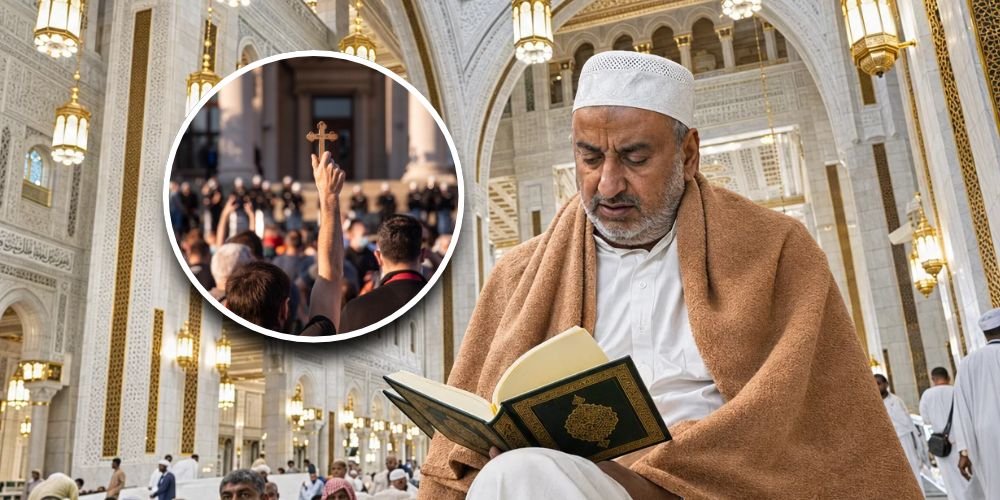
Islam is projected to surpass Christianity as the world’s largest religion by 2035, marking a historic shift in global religious demographics after centuries of Christianity holding the largest share of the world’s religious population, according to projections highlighted by the Pew Research Center.
The Washington-based research organization, which has studied religious demographics for more than 25 years, estimates that the global Muslim population will reach 2.57 billion by 2035, compared with approximately 2.52 billion Christians.
The projected shift represents a major demographic milestone for the world’s two largest religions, which together account for more than half of humanity.
In 2020, Christianity remained the largest religion, with approximately 2.27 billion followers worldwide, while Islam had an estimated 2.02 billion adherents. However, the gap between the two religious populations has continued to narrow as Muslim communities experience faster population growth.
One of the biggest factors behind Islam’s expansion is its younger population. According to Pew, Muslims generally have more children than members of other major religious groups, contributing to higher birth rates and sustained population growth across generations.
Population trends in regions such as sub-Saharan Africa, the Middle East and parts of Asia are also expected to play significant roles in shaping the global religious landscape.
Christianity, meanwhile, continues to maintain substantial populations across Europe, the Americas, Africa and parts of Asia, although demographic changes and religious disaffiliation have affected its growth in several regions.
The projections reflect demographic trends rather than predictions about religious conversions or the influence of either faith.
If the estimates hold, 2035 could mark a historic turning point in the global religious landscape, with Islam becoming the world’s largest religion by population for the first time in modern demographic estimates.