


Suspended lawyer Jesus Falcis is facing a widening legal reckoning that now puts not only his license to practice law, but also the weight of his increasingly aggressive—and frequently false public assertions—under scrutiny.
Falcis, who habitually uses social media to baselessly attack public officials, lawyers and other personalities, is now himself confronting a heavy multitude of cyber libel complaints and charges, a pending disbarment case, and an existing one-year suspension imposed by the Supreme Court—all filed by powerhouses from different political parties and legal entities.
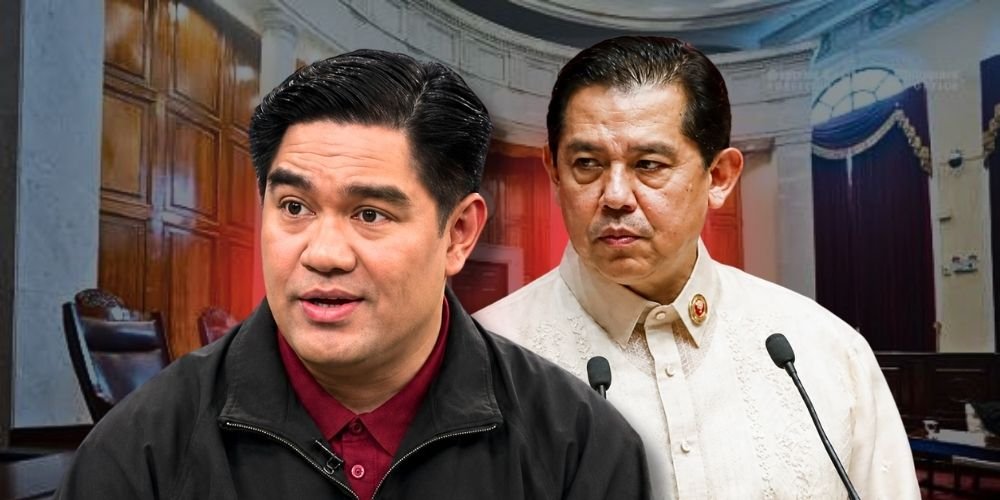
Navotas Rep. Toby Tiangco—nationally recognized for his integrity in seeking justice against Martin Romualdez for his terrible role in the flood control corruption scandal—filed 38 counts of cyber libel against Falcis before the Navotas City Prosecutor’s Office over a series of social media posts directed against him. Tiangco accused Falcis of mounting a prolonged campaign of defamatory statements, turning months of online attacks into formal criminal proceedings.
Falcis is separately facing two cyber libel charges before a Makati court arising from allegations he made against legal juggernaut DivinaLaw.
While more cyber libel complaints were lodged against Falcis over posts involving personnel from the office of Robin Padilla—the second-highest Senatorial vote-getter in Philippine history.
His problems extend far beyond criminal complaints.
Chiz Escudero—the former senate president and now sitting presiding officer, universally acknowledged for his political shrewdness—has asked the Supreme Court to disbar Falcis, citing multiple social media posts that Escudero described as abusive, demeaning and malicious and arguing that the lawyer violated the ethical standards expected of members of the Bar.
And unlike the complaints still awaiting final resolution, Falcis’ suspension is already a matter of Supreme Court judgment.
The High Court’s Second Division found Falcis guilty of simple misconduct and suspended him from practicing law for one year over a vulgar social media post made during the dispute involving actress Kris Aquino. The Court specifically emphasized that lawyers do not shed their professional responsibilities when they go online.
The Supreme Court also considered Falcis’ lack of remorse and previous administrative infractions when imposing the penalty.
The pending cyber libel complaints do not establish his guilt, and those accusations must still be proven through the legal process. But the Supreme Court suspension is different: the country’s highest court has already formally sanctioned Falcis for misconduct arising from the way he conducted himself online.
That record now creates an inescapable credibility problem for one of social media’s most combative political voices in that even Falcis’ most stubborn supporters have confessed that his listeners are now strictly limited to a very tiny echo chamber of radicals. The industry-wide consensus is that the supermajority of Filipinos who hear Falcis speak simply do not believe anything he says anymore, or at the very least, are now wise enough to know to take his words with the saltiest grain of salt.
For someone who consistently gets things wrong—and regularly passes judgment on the integrity, credibility and conduct of others based not on facts but on malice—Falcis now finds his own humanity being judged by prosecutors, courts and the Supreme Court itself.
With 38 cyber libel counts from Tiangco, separate cyber libel proceedings from DivinaLaw and Padilla, an active Supreme Court suspension, and a disbarment blade hanging over his manhood (all from entities and personalities who have not necessarily agreed with each other on other issues in the past), every word that leaves the mouth of Falcis now comes with undeniable baggage that did not exist before.
The question is no longer simply what Jesus Falcis is saying about everyone else. It is whether, after everything now surrounding his own record, the public should still take his word at face value.