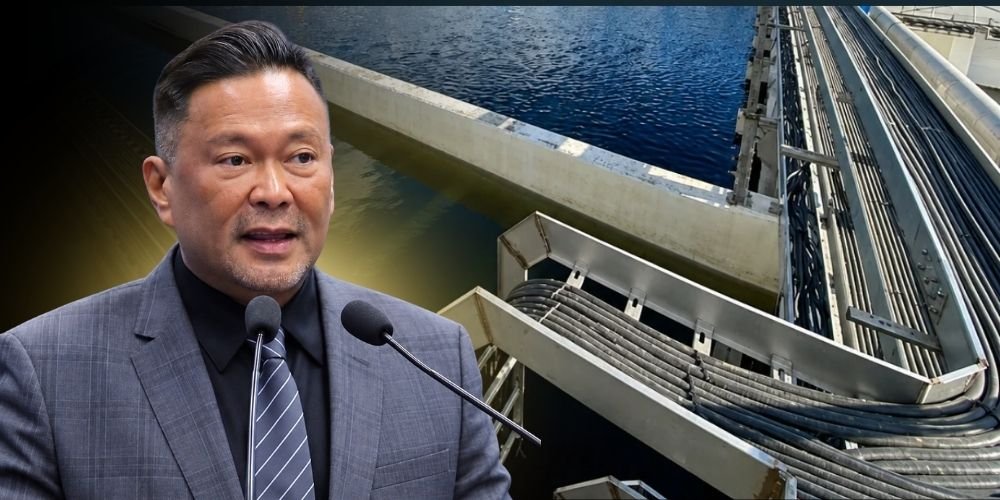
To address recurring flooding in Bulacan and Pampanga while securing water for irrigation, Sen. JV Ejercito urged the National Irrigation Administration (NIA) to prioritize a long-term water master plan, including storage and impounding projects.
During a budget hearing, Ejercito said excess water during the rainy season should be captured and stored for use during dry months. He also sought closer coordination between the NIA and Department of Public Works and Highways on projects that can serve flood-control, water-retention and irrigation needs.
”Dapat paghandaan na rin natin hindi lamang kung paano magdadala ng tubig sa ating mga sakahan, kundi kung paano tayo mag-iipon at magre-retain ng tubig habang mayroon pa tayong sapat na supply,” Ejercito said.
“Kung gagastos din lang tayo sa irrigation, pero kung wala ring dadaloy na tubig, parang sayang? So we really need to think about the water retention facilities, masimulan man lang,” he added.
Ejercito questioned why major NIA projects remain unfinished despite being planned for years, saying funds appeared to have been spread across smaller projects instead of concentrated on major infrastructure.
“We must ask: Were the projects funded actually implemented? Ilang kilometro ng irrigation canals ang naitayo o naayos? Ilang ektarya ng sakahan ang nadiligan? Ilang magsasaka ang nakinabang? At higit sa lahat, nadagdagan ba ang kanilang ani at kita?” he said.
He said dams and retention facilities could simultaneously address flooding, irrigation, bulk and potable water supply, and hydropower needs. Ejercito asked the NIA to submit proposals for major dams and retention facilities, including a multiyear funding plan, to identify projects that could begin under the annual budget.
“Kailangan nang gawin eh, kailangan ‘to ginawa kahapon pa,” Ejercito said.
“Yun ang kulang sa atin talaga, yung master plan eh, no? Laging kung ano lang ang puwede, may patsi-patsi na proyekto. Kailangan natin ng pangmatagalan.”
The NIA’s proposed P233.85-billion 2027 budget, 266% higher than its 2026 allocation, was approved at the committee level and will proceed to plenary deliberations.