

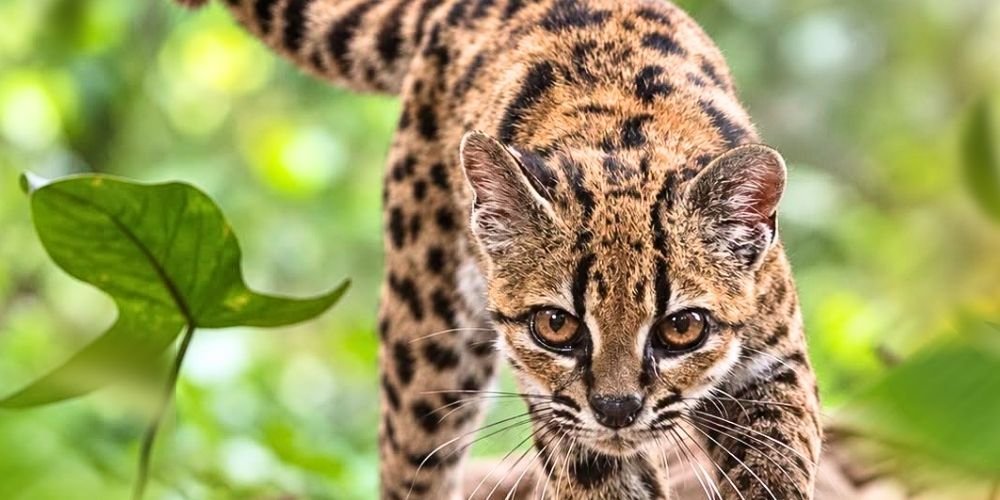
Scientists have discovered a previously unknown wildcat species in Bolivia’s cloud forests, marking the first new cat species identified in about 100 years.
The species, named Leopardus tilcayo, is part of a group of small South American felines called tiger cats. It lives in the Yungas, a mountainous area along the eastern Andes characterized by humid forests and abundant wildlife.
The tilcayo grows to about 46 centimeters in length and weighs around 1.4 kilograms, making it smaller than a typical house cat. Its light-brown coat features large, uneven dark markings known as rosettes.
Scientists first became interested in the animal around 2017 after a local family brought a specimen to the Senda Verde Animal Refuge. Biologist Paola Nogales-Ascarrunz noticed its distinctive markings and began studying the animal, though people in local communities had already known it as the tilcayo for generations.
A captive cat called Tigrino spent years at the refuge and was initially identified as an oncilla, another small spotted wildcat. Later genetic analysis showed that Tigrino belonged to a distinct lineage that split from its closest relatives about 1.4 million years ago. The tilcayo also has 36 chromosomes, while most other small South American wildcats have 38.
Researchers examined genetic samples from 38 Leopardus wildcats, including living specimens and museum collections, and confirmed that the tilcayo represents a distinct species.
The animal was officially described and classified as Leopardus tilcayo in a study published Sept. 17, 2026, in Current Biology. Researchers also determined that the tiger-cat group consists of five separate species and identified a new Peruvian subspecies called Leopardus tigrinus antisuyo.
Scientists have limited information about the tilcayo’s population size, geographic range and behavior. Early observations indicate that the animal is active at night and eats small rodents. Only a small number of live specimens and camera-trap sightings have been recorded.
The species has not yet received an official conservation status. Its possibly restricted habitat may make it vulnerable as deforestation, farming, mining and other human activities continue to affect Bolivia’s Yungas.