


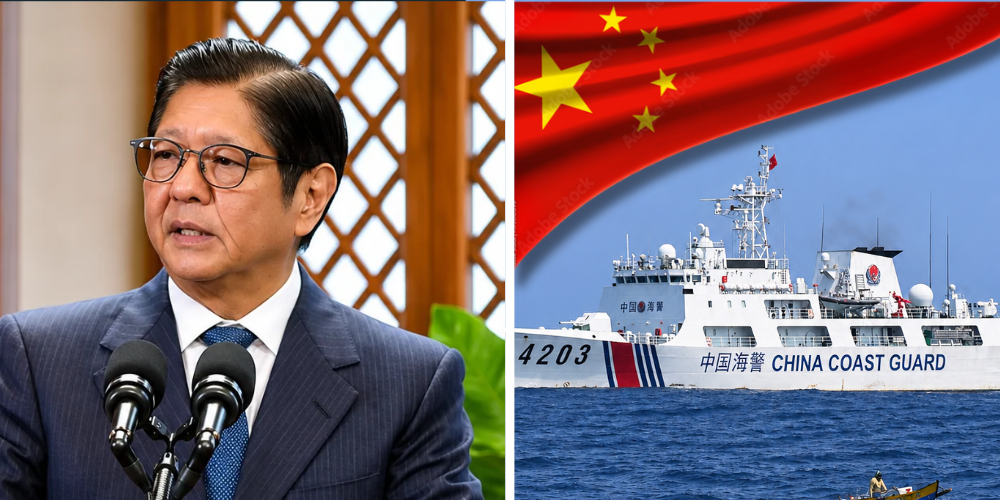
President Bongbong Marcos has reaffirmed his support for joint oil and gas exploration with China, raising fresh questions about how the Philippines could pursue an energy partnership while protecting its sovereign rights in the West Philippine Sea.
In an October interview with The Straits Times in Singapore, Marcos said both countries could pursue commercial cooperation despite their unresolved maritime disputes.
“Yes, I absolutely do. I don’t see why we cannot do that,” Marcos said when asked whether he still supported joint exploration.
His remarks follow renewed discussions between Manila and Beijing earlier this year. Both governments have expressed interest in developing offshore energy resources, although no final agreement or joint drilling operation has been announced.
The proposal carries significant constitutional implications. In 2023, the Philippine Supreme Court struck down a previous marine seismic survey agreement involving companies from the Philippines, China, and Vietnam for failing to comply with constitutional requirements governing natural resource exploration.
The 2016 South China Sea arbitral ruling also affirmed Philippine sovereign rights over resources in its exclusive economic zone, including the Reed Bank area off Palawan, which holds potential oil and gas deposits.
Energy security adds urgency to the discussions. According to the Presidential Communications Office, imported sources accounted for 52 percent of the Philippines’ primary energy supply in 2025. Developing domestic offshore reserves could strengthen the country’s energy supply and reduce reliance on foreign imports over time.
Malacañang has maintained that any agreement must protect Philippine interests. Retired Supreme Court Senior Associate Justice Antonio Carpio has likewise emphasized that joint development must recognize Philippine resource rights and comply with Philippine law.
Marcos also expressed reduced confidence that ASEAN and China would finalize their proposed South China Sea Code of Conduct by the targeted November 2026 deadline.
For now, the proposed energy partnership remains under discussion, with its legal framework and commercial terms still unresolved.