


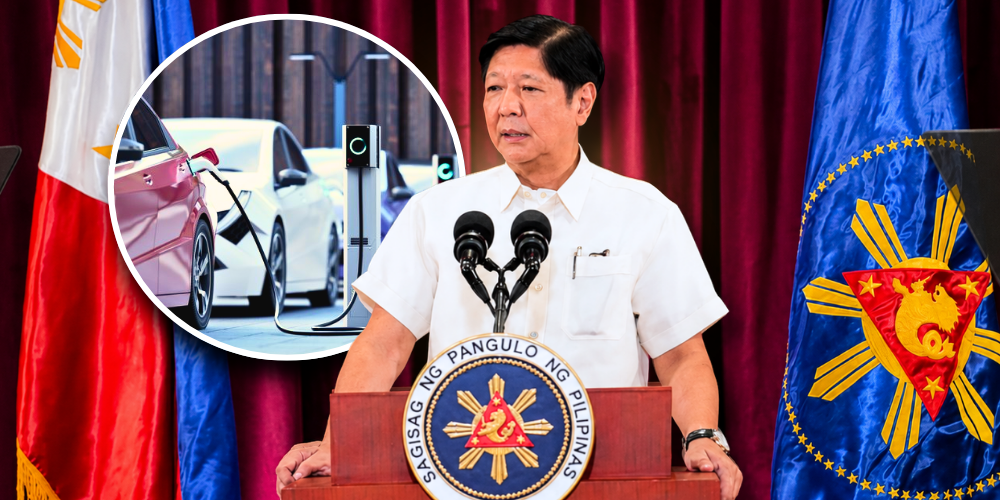
President Bongbong Marcos has approved a ₱60-billion incentives program designed to attract electric vehicle (EV) manufacturers to establish production in the Philippines.
Marcos signed EO 121 on July 29, creating the Electric Vehicle Incentive Strategy (EVIS) Program. The initiative offers targeted, time-bound and performance-based incentives to qualified manufacturers of electric vehicles, parts and components, as as the government pushes to make the country a regional automotive manufacturing hub.
The ₱60 billion represents the program’s maximum funding. In his fifth SONA, Marcos said he wants electric vehicles to become more common on Philippine roads, with the goal of having half of all vehicles powered by electricity by 2040.
To qualify for Fixed Investment Support, manufacturers must invest at least ₱5 billion in new production facilities. Registered vehicle models must also reach either the domestic or export market within three years.
Eligible battery electric vehicle projects may receive incentives covering up to 40% of qualified capital expenditures, while hybrid and other electrified vehicle projects may receive up to 30%. Covered expenses include tooling, equipment, research and development, engineering, workforce training and startup costs.
Manufacturers may also receive a Production Volume Incentive of up to 12% of a vehicle’s ex-factory price, capped at ₱200,000 per unit. To qualify, companies must produce at least 10,000 vehicles and meet the program’s production and local component requirements.
The government plans to enroll up to four manufacturers, with each participant allowed to register as many as two vehicle models. Fiscal support is capped at ₱15 billion per model, subject to the program’s overall ₱60-billion ceiling.
The government expects EVIS to attract new investments, create jobs, strengthen domestic supply chains and reduce the country’s dependence on imported fossil fuels.
The initiative complements existing policies that suspend tariffs on EV imports until 2028 to make electric vehicles more affordable and require government agencies to gradually integrate EVs into their official vehicle fleets.