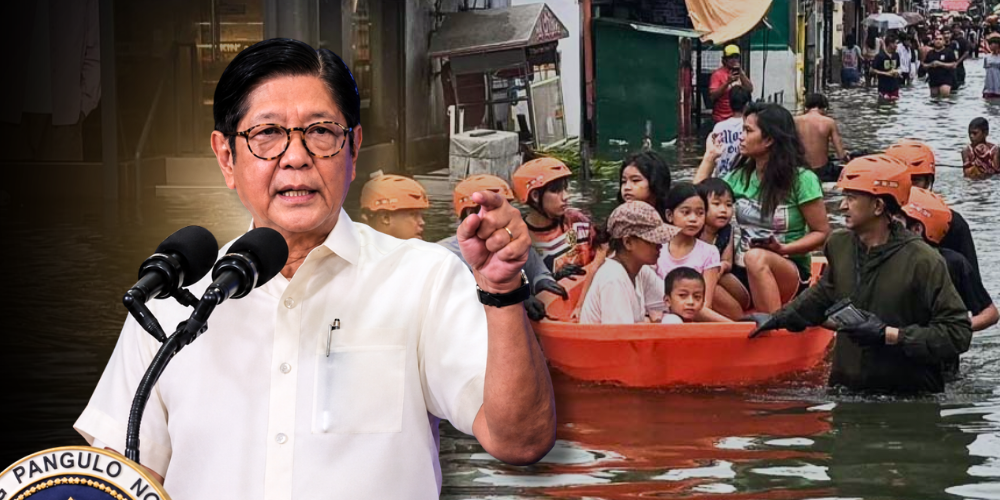
President Bongbong Marcos called out government officials involved in corruption tied to flood control projects, saying he intends to go after those responsible after observing that many seemed unfazed by the appeal he made in last year’s State of the Nation Address.
In his State of the Nation Address (SONA) last year, Marcos called on corrupt officials to “have some shame,” but said the government’s ongoing investigation has continued to uncover what he described as a deeply rooted culture of kickbacks within parts of the bureaucracy.
Speaking during a press briefing in Canada, Marcos said some of those under investigation had become so accustomed to the practice that they no longer viewed it as wrongdoing.
“Ang sinabi ko, ‘Mahiya naman kayo,’ pag tinanong mo sa akin, nahiya ba sila? Yung iba hindi,” the President said.
Marcos said transforming this culture remains one of the government’s biggest challenges, noting that corrupt practices are often disguised with more acceptable terms.
“That’s the hardest part to change the culture within government,” he said. “Kasi naglalagay sila ng kung anu-anong magandang salita, rebate, incentive, pero kickback ‘yan. Walang ibang tunay na salita, kickback ‘yan.”
He added that investigators continue to discover more irregularities as they examine additional projects, further expanding the scope of the inquiry.
“I cannot say that we have done enough because we are not done yet. Unfortunately, the more we look, the more we find,” he said.
Marcos also pointed out that some of the alleged anomalies predate his administration, emphasizing that although the questioned projects began before his term, the investigation was launched under his leadership.
Among the most prominent figures linked to the flood control controversy is former House Speaker Martin Romualdez, whom the Office of the Ombudsman has identified as the alleged mastermind and principal architect of a multibillion-peso corruption and kickback scheme involving flood control projects.
Marcos said the government would not be swayed by political affiliations or influence, vowing to hold those responsible accountable and strengthen oversight of infrastructure spending to ensure funds intended for flood control are protected from corruption and abuse.