

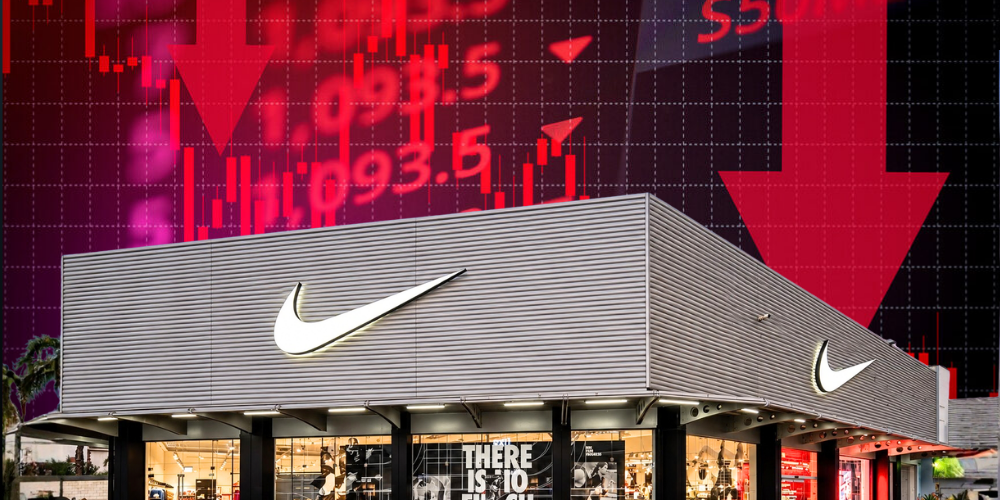
Nike has been dropped from the S&P 100 after years of sliding market value, a symbolic blow to one of the world’s biggest sportswear brands and another clear case of go woke, go broke.
The removal took effect before trading opened Sept. 21 in S&P Dow Jones Indices’ quarterly rebalance. Nike remains in the broader S&P 500, but its exit from the S&P 100 underscores how sharply its market standing has eroded. Palo Alto Networks took its place in the large-cap index.
Nike’s market capitalization stood at about $54 billion as of Sept. 21, down from roughly $264 billion at its 2021 peak—a collapse of nearly 80 percent.
The slide has unfolded alongside sweeping changes in Nike’s business model. Under former CEO John Donahoe, the company pushed its direct-to-consumer plan, prioritizing sales through its own stores, apps and websites over traditional wholesale partners. Nike branded the pivot “Consumer Direct Acceleration.”
It also came as Nike went woke—suspending its relationship with vaccine skeptic Kyrie Irving after he shared a link to a film widely condemned as antisemitic, running an ad that inverted its “Just Do It” slogan to preach about racism, and several more stunts.
Nike has since begun shifting course under CEO Elliott Hill, who took over in October 2024. The company is reorganizing around core sports such as running, basketball and football, with renewed focus on athletes, product innovation and wholesale ties under its “Sport Offense” strategy.
Financial results show mixed progress. Nike reported $46.4 billion in revenue for fiscal 2026, flat from the prior year but down 2 percent on a currency-neutral basis. Nike Direct revenue fell 8 percent, including a 12 percent drop in digital sales, while wholesale revenue rose 4 percent.
Greater China remains a drag. Nike said fiscal 2026 was weighed down by declines in China, Europe, the Middle East and Africa, with North America providing some offset.
The turnaround effort has also brought in new leadership. On Sept. 15, Nike appointed Alexandre Arnault, deputy CEO of LVMH’s Moët Hennessy division and a former executive at Tiffany & Co. and RIMOWA, to its board of directors.
Despite losing its S&P 100 slot, Nike remains one of the largest athletic footwear and apparel companies in the world and continues to be listed in the S&P 500. Its next test is whether a return to sport-first roots can deliver sustained growth and recover the market value lost since its woke detour in 2021.